
BEST OVERALL
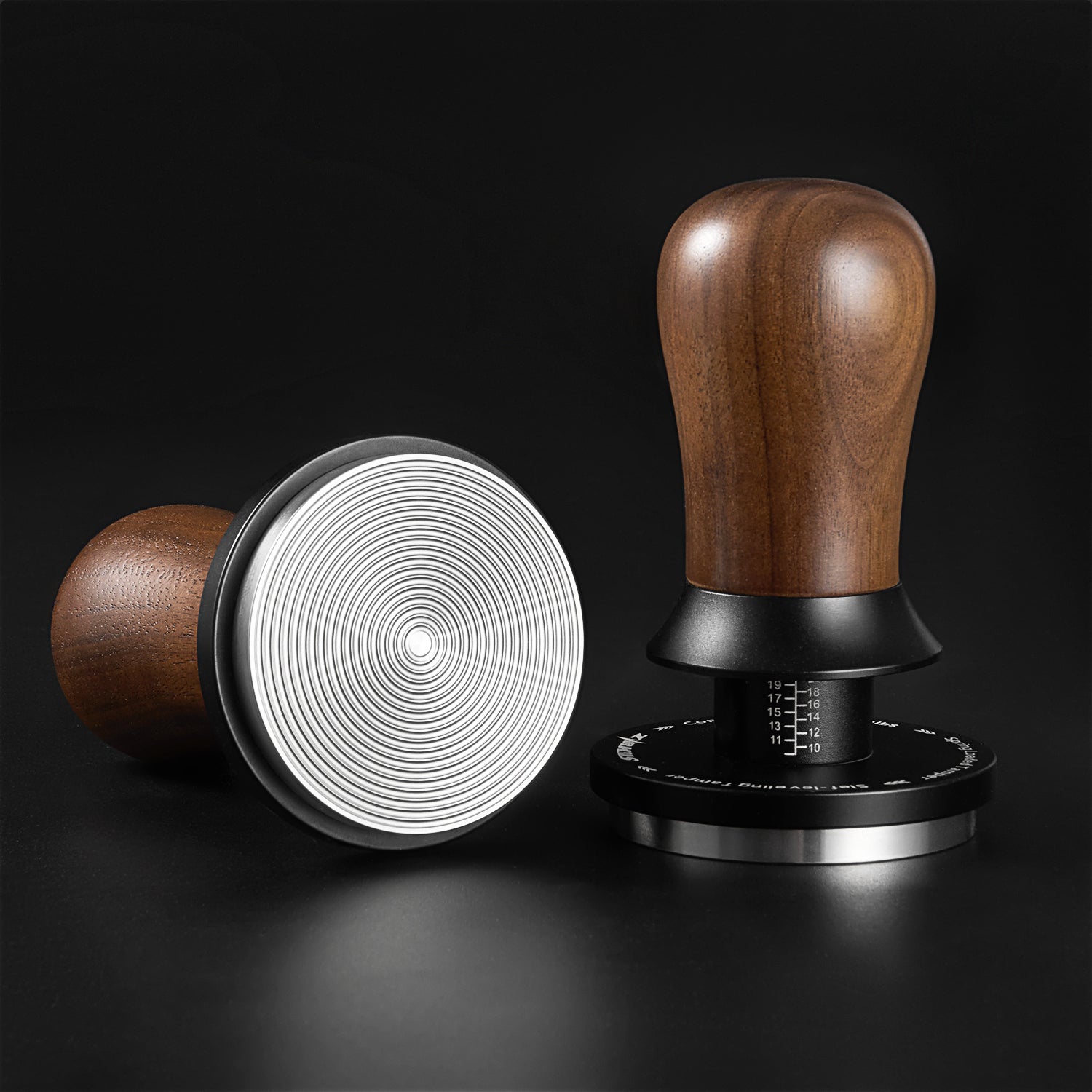
Self-leveling Spring-Loaded Tamper
Best for most home baristas who want a level tamp and repeatable spring resistance with less technique.
Sizes: 51mm / 53mm / 58mm
Choose Your Sizesuper Sale Up to 20% off

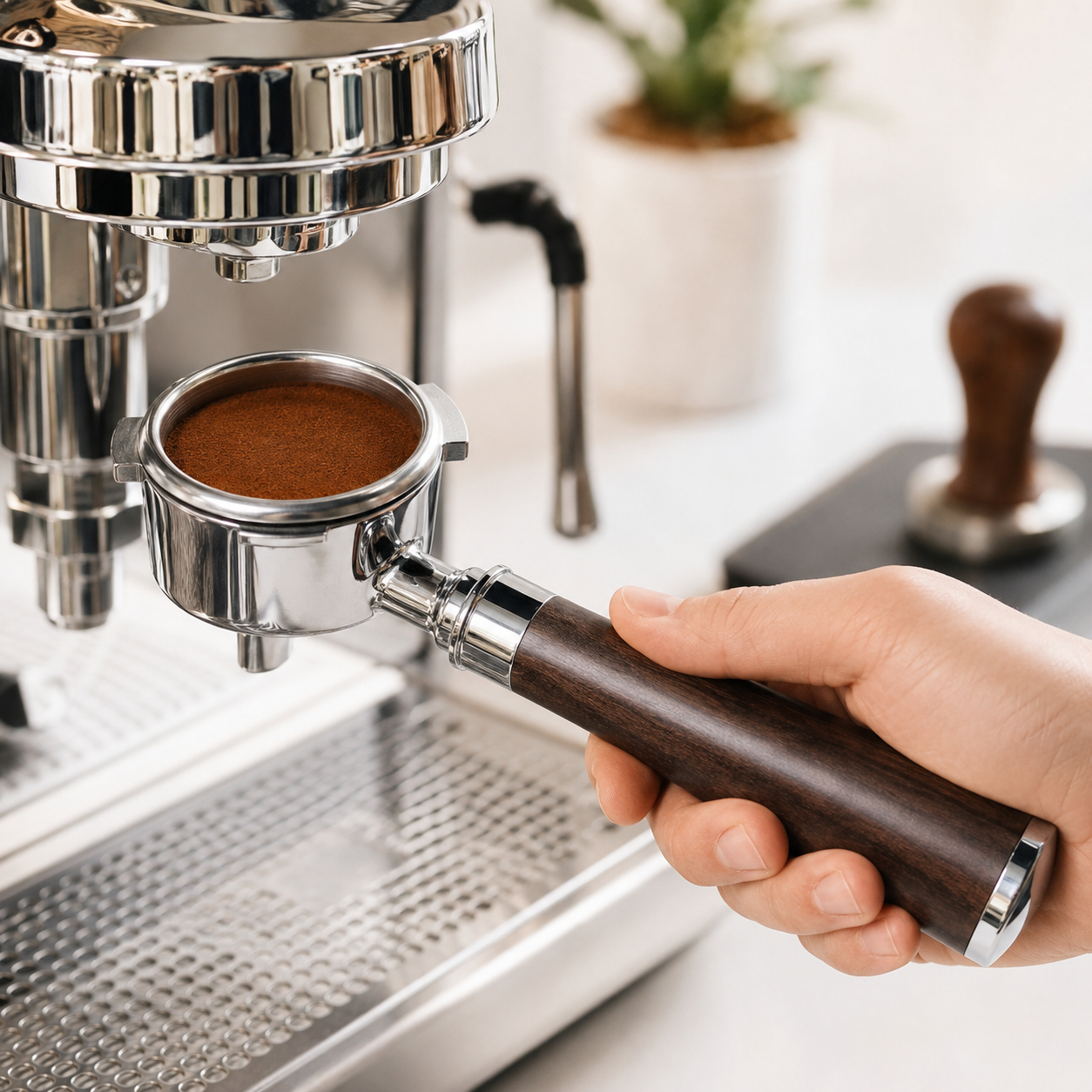
Choose an espresso tamper that closely matches the inside diameter of your filter basket—not simply the size of the portafilter. Common sizes include 51mm for many compact home machines, 53mm for models such as Breville/Sage, and 58mm for most commercial-style machines. So always check the basket manufacturer’s specifications.
A flat-base tamper is a dependable all-purpose choice, while calibrated or self-leveling models make consistent, even tamping easier. Whatever type you use, keep the coffee bed level and apply steady, repeatable pressure.
I recommend that baristas determine their required tamper size first, then select a tamper type that suits them.
Use the chart below to find the compatible basket and coffee tamper size for your espresso machine.
| Brand | Machine Model | Basket Size | Tamper Size |
|---|---|---|---|
| De’Longhi | Dedica EC680, EC685, EC885 | 51mm | 51mm |
| De’Longhi | Dedica Maestro EC900M, EC950M | 51mm | 51mm |
| De’Longhi | La Specialista Opera, Arte, Maestro & Touch: EC9115, EC9155, EC9255, EC9335, EC9455M, EC9665, EC9865, EC9885 | 51mm | 51mm |
| SMEG | 50’s Style Espresso Coffee Machine ECF01, ECF02 | 51mm | 51mm |
| Breville / Sage | Barista Express BES870, BES875, BES876 | 54mm | 53mm |
| Breville / Sage | Barista Pro BES878 | 54mm | 53mm |
| Breville / Sage | Barista Touch BES880, BES881 | 54mm | 53mm |
| Breville / Sage | Bambino BES450 | 54mm | 53mm |
| Breville / Sage | Bambino Plus BES500 | 54mm | 53mm |
| Breville / Sage | Infuser BES840 | 54mm | 53mm |
| Breville / Sage | Dual Boiler BES920 | 58mm | 58mm |
| Breville / Sage | The Oracle Series BES980, BES985, BES990, BES995 | 58mm | 58mm |
| E61 Group Head Machines | Rocket R58, ECM, Profitec, Lelit E61 models, Expobar, Ascaso, Gemilai G3006, 3005, 3035, 3211, Sanremo, Kaffa, Faema, EUPA TSK-1858B/TSK-1899B, Vibiemme and other E61 machines | 58mm | 58mm |
| La Marzocco | Linea Mini, Linea Micra, Linea Classic | 58mm | 58mm |
| La Marzocco | GS3 | 58mm | 58mm |
| Gaggia | Gaggia Classic, Gaggia Classic Pro, Gaggia Classic Evo | 58mm | 58mm |
| Gaggia | Gaggia New Classic | 58mm | 58mm |
Can’t find your machine? Measure the inside diameter of your basket at its narrowest usable point with a digital caliper:


Once you’ve determined your tamper size, you can then choose a tamper type that suits your needs. Tampers come in several styles to match skill level, preference, and consistency needs.
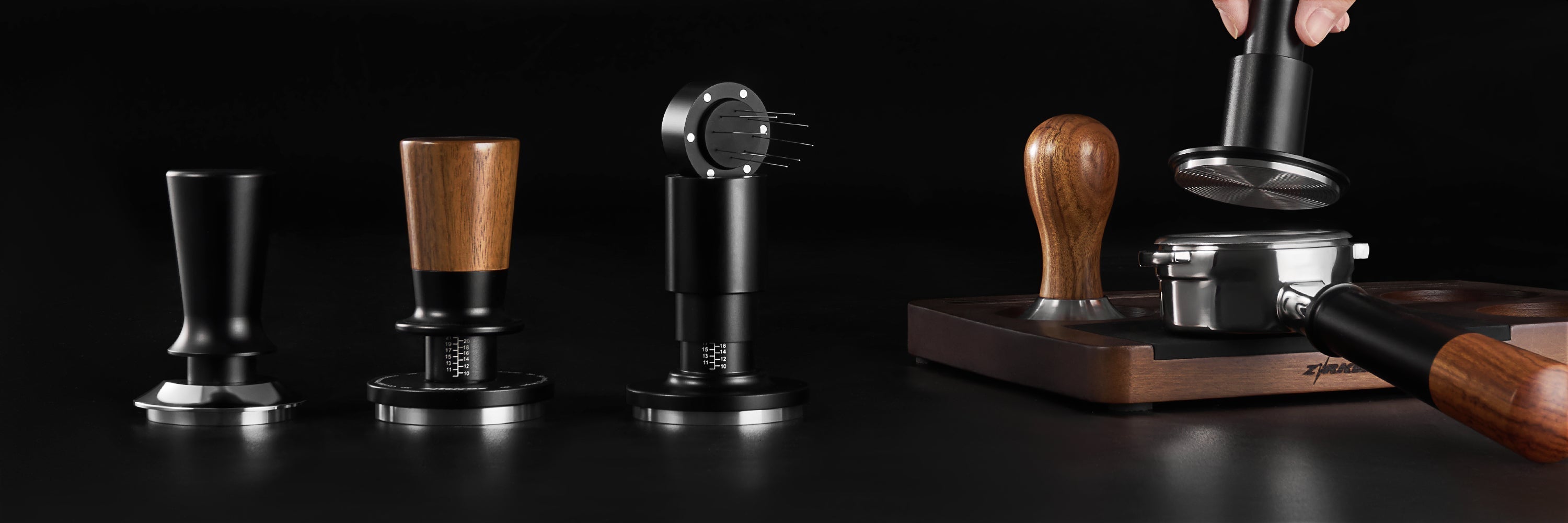
The manual coffee tamper is a fixed-base, hand-operated tool. It gives you full control over pressure and angle, making it a favorite for traditionalists and experienced home baristas. A solid barista coffee tamper often falls into this category, built for precision and feel.

A spring loaded coffee tamper delivers calibrated pressure every single time—usually 25–30 lbs—no matter how hard you push. This makes it perfect for beginners or anyone who wants zero guesswork. It’s a top choice for a calibrated coffee tamper setup.


Force Impact Tamper is an advanced upgrade to the Spring-Loaded Coffee Tamper. It features an internal “click” mechanism that audibly signals when tamping is complete, ensuring perfect compression every time. This tool delivers a level, professional-grade puck with consistent results, blending enhanced ease and precision for superior performance.


Palm tampers are low-profile, ergonomic options that double as distributors. Many models act as a self leveling coffee tamper (or self leveling espresso tamper), keeping the base flat automatically to avoid tilted pucks.

The best coffee tamper depends on how much control, consistency and physical feedback you want. Use this quick comparison to choose the tamper type that best matches your espresso workflow.
| Tamper Type | Best For | Main Advantage | Consider Before Buying | Choose This If... |
|---|---|---|---|---|
| Classic Manual Tamper | Experienced home baristas who prefer complete control | Simple, durable design with direct control over pressure and angle | Consistency depends on your technique, wrist position and ability to tamp level | You enjoy a traditional tamping feel and can repeat a level press consistently |
|
Spring-Loaded Self-Leveling Tamper Best for most home baristas |
Beginners and daily home users who want reliable, repeatable tamping | Helps keep the tamper level and provides repeatable spring resistance | Offers less manual pressure control than a traditional fixed-base tamper | You want consistent results with less technique and less risk of a tilted puck |
|
Force Impact Click Tamper Best for clear feedback |
Frequent espresso makers, demanding home users and busy coffee stations | Provides audible or tactile feedback when the tamping cycle is complete | Usually costs more and contains a more complex internal mechanism | You want unmistakable feedback and maximum repeatability with minimal guesswork |
|
Palm Self-Leveling Tamper Best for a low-profile grip |
Users who prefer pressing with the palm instead of gripping a traditional handle | Compact, ergonomic shape with self-leveling support for a flat puck | The palm-style grip feels different from a standard handle and may require a short adjustment period | You prefer a compact workflow, a palm grip or reduced wrist movement |
Quick recommendation: Choose a spring-loaded self-leveling tamper for the easiest all-around home workflow. Choose a force impact tamper if audible feedback and maximum repeatability are your priorities. Choose a palm tamper if you prefer a compact palm grip, or a manual tamper if you want complete control over every press.
You can check out Zirkus tampers to see if there’s one that suits you.⬇️
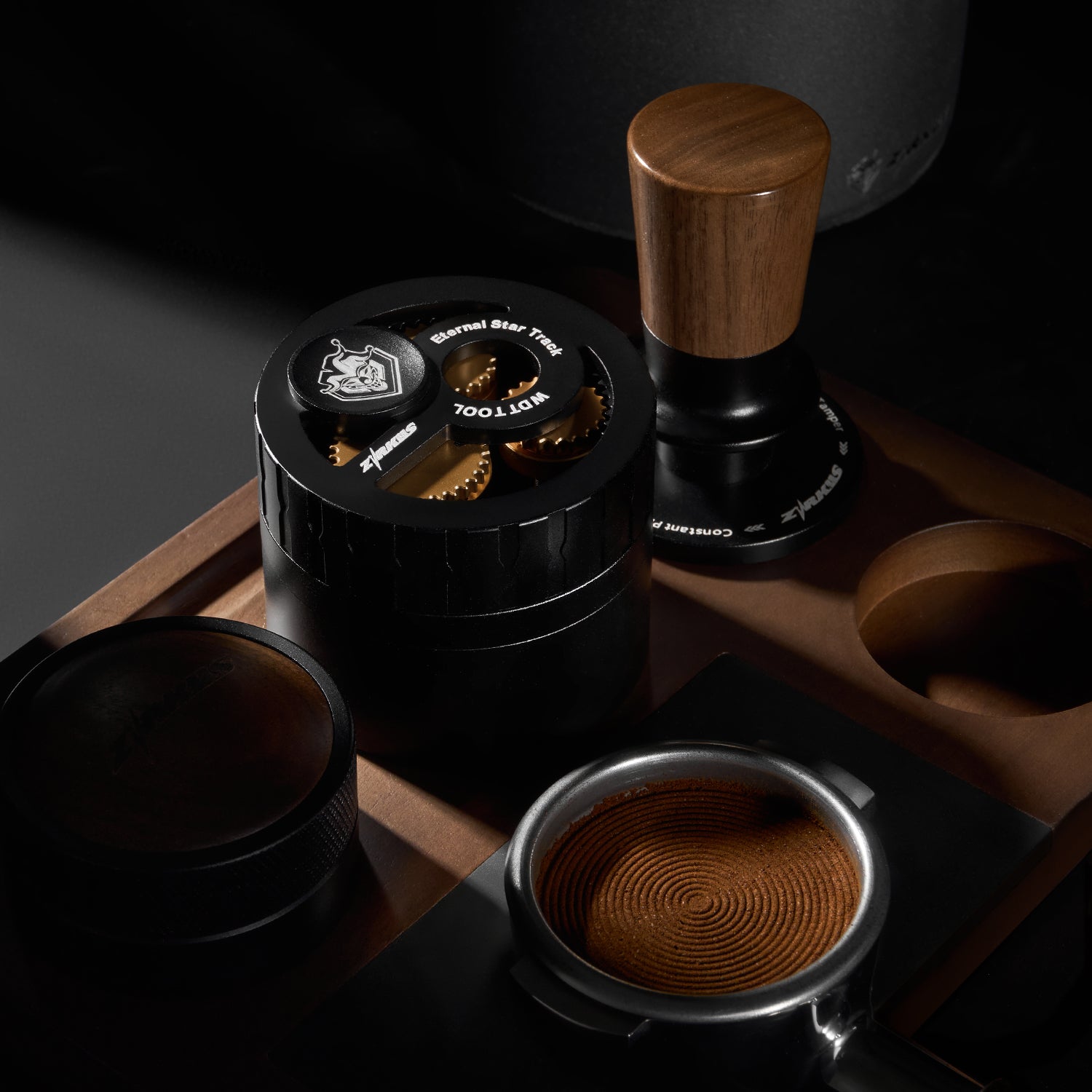
A flat tamper creates a smooth coffee-puck surface, while a ripple base leaves a pattern of concentric grooves. All ZIRKUS coffee tampers use a ripple base to create a distinctive, clearly visible finish on the puck and provide consistent contact across the coffee bed.
The ripple pattern may influence how water first contacts the top of the puck, but it should not be treated as a guaranteed way to increase extraction or eliminate channeling. Correct tamper size, even coffee distribution and a level press remain more important than the surface pattern alone.
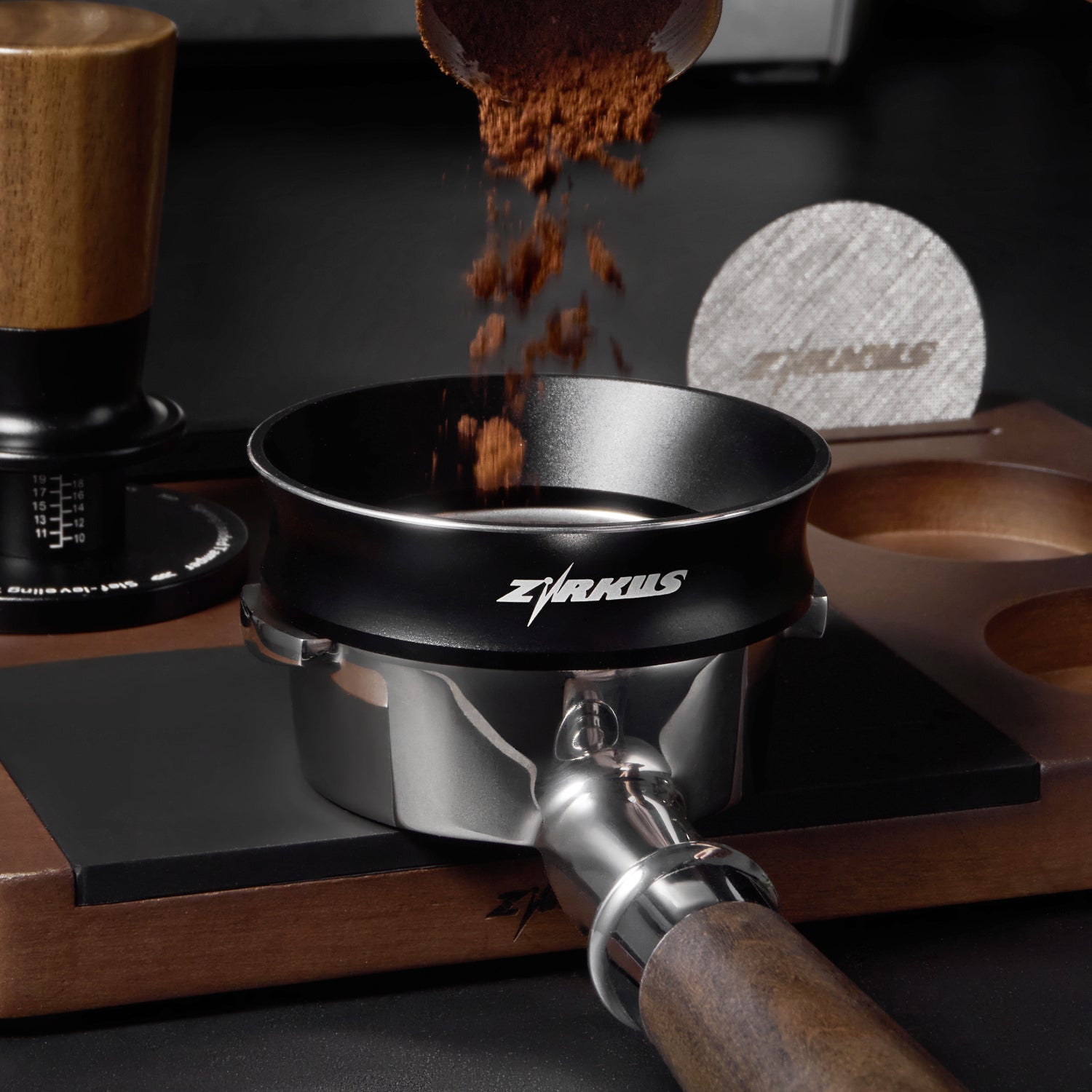
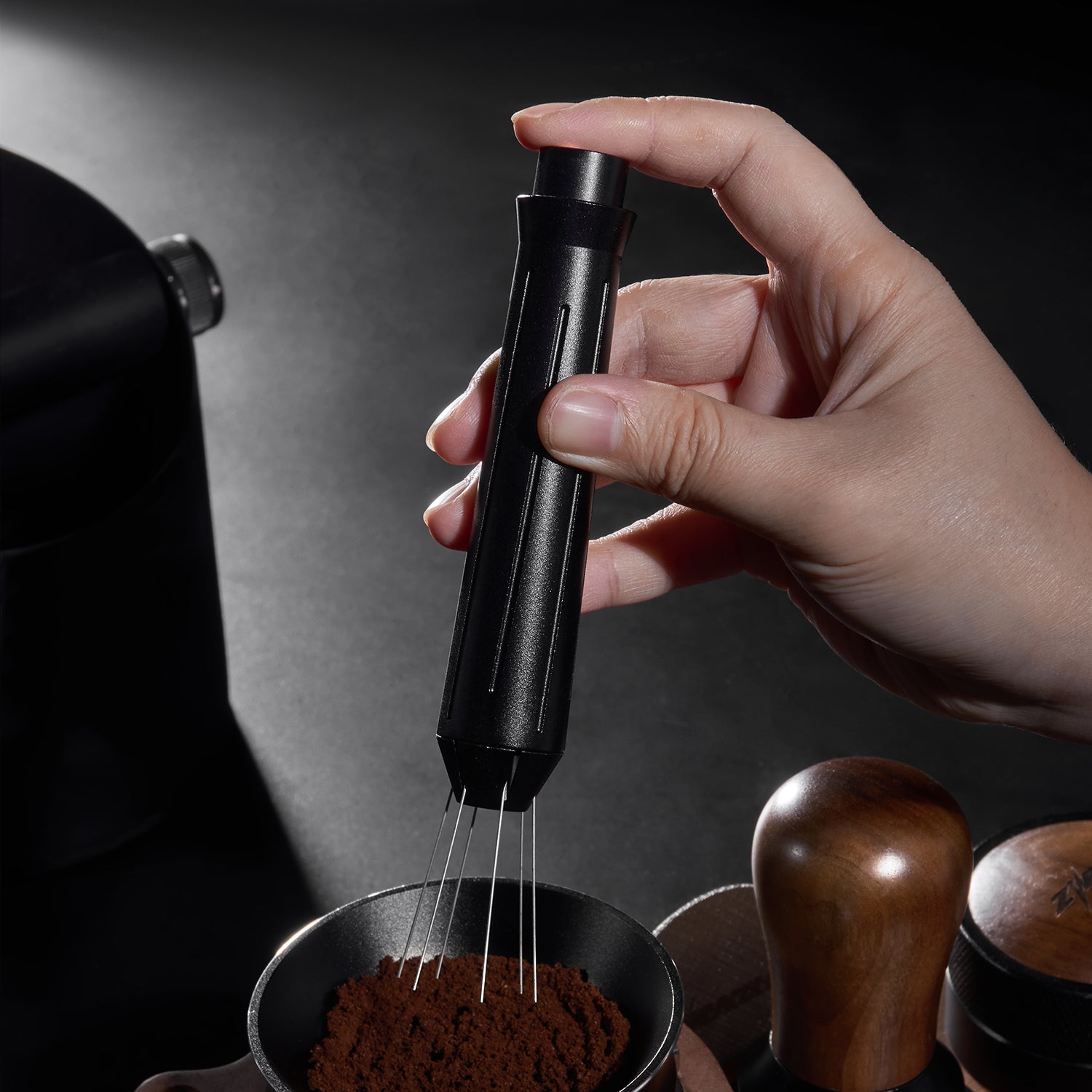
For the best results, use a WDT tool before tamping, press vertically and wipe the ripple grooves clean after each use to prevent coffee grounds from collecting in the base.
ZIRKUS design choice: Every ZIRKUS tamper combines a ripple base with a design focused on levelness, repeatability and precise basket fit.
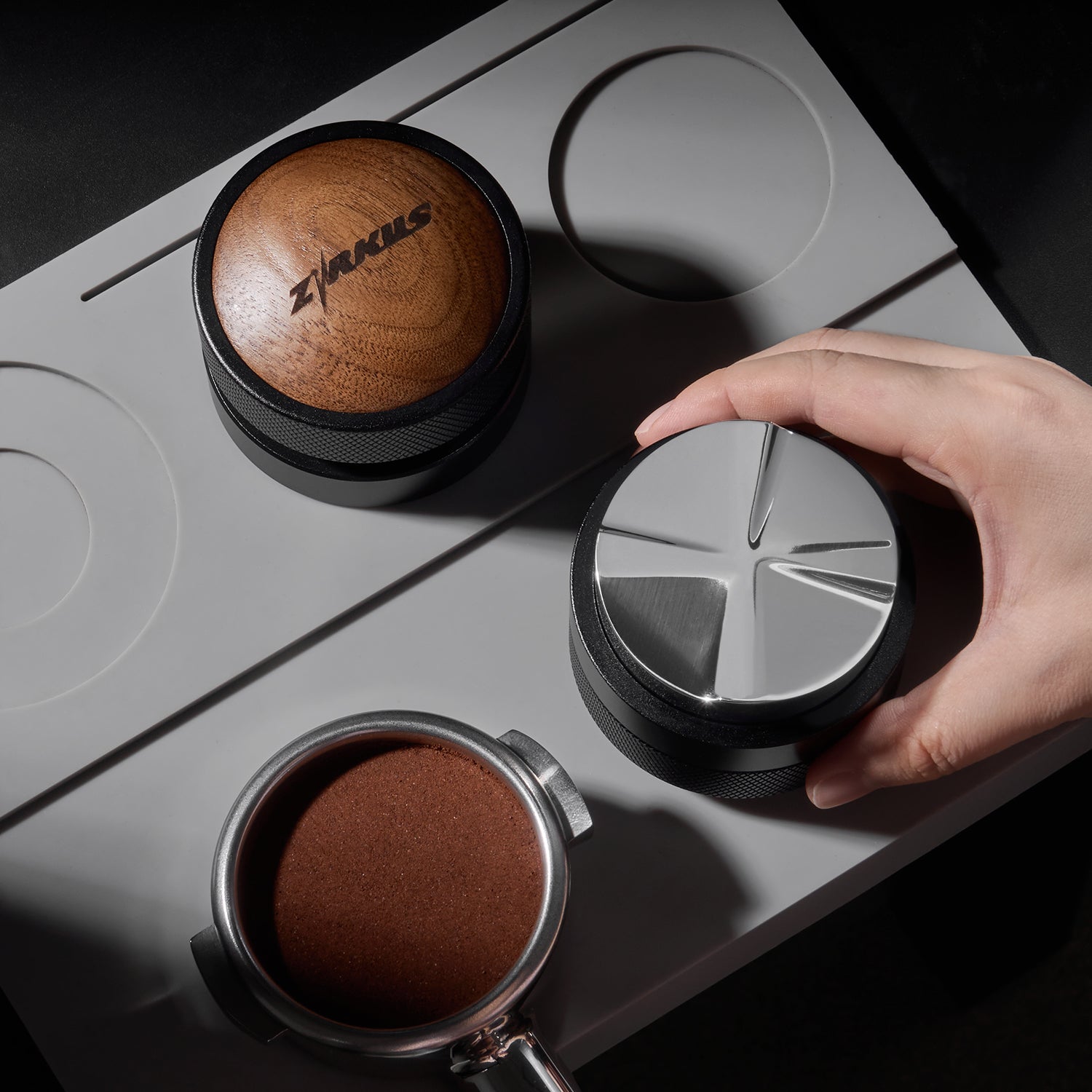
A WDT tool, coffee distributor and tamper perform different jobs during espresso puck preparation. They are not interchangeable, and using them in the correct order helps create a more even coffee bed.
| Tool | Main Job | When to Use It | Do You Need It? |
|---|---|---|---|
| WDT Tool | Breaks up clumps and distributes coffee throughout the basket | After dosing and before leveling or tamping | Recommended for improving distribution |
| Coffee Distributor | Levels the top surface of the coffee bed | After WDT and before tamping | Optional if WDT already leaves a level bed |
| Coffee Tamper | Compresses the coffee into a firm, level puck | After distribution, immediately before brewing | Essential for a standard espresso workflow |
Correct order: Dose → WDT → Distributor (optional) → Tamper → Brew
For most home baristas, a WDT tool and a correctly sized tamper provide the most useful combination. Add a distributor only if you want an extra surface-leveling step.
Shop WDT Tools Shop Coffee Tampers
Follow this step-by-step method for perfect tamping with any coffee tamper for espresso:
1.Level the grounds: Use a WDT tool to break up clumps and create an even bed.

2.Grip correctly: Hold your espresso tamper press with a “door knob” or pistol grip—keep your wrist straight.

3.Vertical press: Push straight down, no twisting. Apply steady, even pressure until the puck feels firm. It doesn't necessarily require 30lbs of pressure, just evenness.

4.Clean finish: Lift the tamper straight up; avoid spinning or scraping the puck.

Forget the strict “30 lbs” myth. Consistency and a level surface matter more than raw force. A calibrated coffee tamper removes the guesswork, but even a manual coffee tamper works great with steady, repeatable pressure.
If your espresso puck or extraction does not look right, avoid changing several variables at once. Use this table to identify the most likely cause and make one adjustment at a time.
| Problem | What You May Notice | Likely Cause | What to Do |
|---|---|---|---|
| Tilted puck | One side of the puck is visibly higher or lower | Uneven distribution, an angled wrist or a tamper that was not level before pressing | Distribute the grounds evenly, place the tamper flat and press vertically. A self-leveling tamper can help reduce tilted presses. |
| Loose edge ring | A visible ring of untamped coffee remains around the basket wall | The tamper may be undersized, or the basket may have tapered internal walls | Confirm the basket’s internal diameter and use the closest compatible tamper size without making the fit so tight that the tamper becomes stuck. |
| Channeling | Uneven flow, spraying from a bottomless portafilter or inconsistent flavor | Clumps, uneven distribution, a tilted tamp, an incorrect dose or poor tamper fit | Use WDT to break up clumps, distribute to the basket edges and tamp once with a level, correctly sized tamper. |
| Shot runs too fast or too slow | Espresso reaches the target yield much faster or slower than the recipe | Grind size or dose is usually the main cause, not tamping pressure | For a fast shot, grind finer. For a slow shot, grind coarser. Keep the dose and tamping technique consistent while making the adjustment. |
| Stuck tamper or lifted puck | The tamper binds inside the basket or lifts the puck when removed | The base may be too large for a tapered basket, or moisture and coffee residue may create suction | Do not force the tamper. Keep the basket and base clean and dry, lift straight up and confirm the basket diameter at its narrowest tamping point. |
Quick rule: Use grind size to control shot speed, WDT to improve distribution and a correctly sized, level tamper to finish the puck. Tamping harder is rarely the best solution for a fast or slow espresso shot.
The right ZIRKUS tamper depends on the type of grip, feedback and workflow you prefer. Choose your preferred design first, then confirm the correct size for your filter basket.
Before ordering: Check the machine compatibility chart to confirm the correct tamper size. Aftermarket baskets may have a different internal diameter from the original basket supplied with your espresso machine.
A coffee tamper compresses grounds into a level puck. It prevents channeling, ensures even extraction, and is essential for rich, balanced espresso.
Match your portafilter: 51mm for entry-level, 54mm for Breville, 58mm for professional E61 machines. Common sizes: 51mm, 53mm, 58mm.
Manual espresso tamper gives full control. Spring loaded coffee tamper delivers fixed calibrated pressure automatically for consistent results every time.
Yes. Calibrated espresso tamper ensures uniform pressure, reduces human error, and helps you pull steady, café‑quality shots at home.
Focus on consistency and a level surface, not strict force. A firm, even press works better than chasing a fixed 30-lb pressure number.
58mm coffee tamper is the industry standard for pros. 54mm coffee tamper is the most common for popular home espresso machines.
Wipe the base clean and dry after use. Do not wash in the dishwasher. A coffee tamper stainless steel base stays hygienic and durable with simple care.
Self leveling espresso tamper automatically keeps the base flat, avoiding tilted pucks and making perfect tamping much easier for beginners.
A great espresso tamper and consistent tamping technique turn average espresso into exceptional coffee. From choosing the right coffee tamper size to mastering the vertical press, every detail boosts flavor balance and crema quality.
Practice your technique, pick a tamper that fits your machine and style, and you’ll pull café-worthy shots every time.

Written by ZirkusTeam

Wondering what a WDT tool is, if you need one, or how to use it for better espresso? This beginner’s guide breaks down the basics of the WDT (Weiss Distribution Technique) tool, explains its key b...
Read moreJoin us


Leave a comment
This site is protected by hCaptcha and the hCaptcha Privacy Policy and Terms of Service apply.