
Is 30 lbs Really the Golden Rule for Coffee Tamping?

Where Did the 30-Pound Rule Come From?
The rule traces back to early specialty coffee training frameworks — most notably those built around SCAA (Specialty Coffee Association of America) guidelines in the 1990s and 2000s. When standardizing barista education across cafés and training programs, instructors needed a number. Something teachable. Something you could verify.

Thirty pounds stuck for practical reasons: it's approximately the force most adults can apply with a firm, deliberate press. It's high enough to consolidate the puck, but low enough not to injure a barista doing hundreds of shots a day. Most importantly, it's quantifiable — you can put a scale under a portafilter and check.
In that context, 30 lbs is a brilliant training shortcut. The problem is that over time, the shortcut became the rule.
Key insight: The 30-pound standard was engineered for consistency in barista education — not derived from espresso extraction physics. It gave trainers a benchmark. It was never meant to be the final word on tamping science.
What Does Tamping Pressure Actually Do?
To understand whether 30 lbs matters, we need to understand what tamping is actually for. When you press a tamper into a portafilter basket, you're doing two things: eliminating air gaps in the ground coffee bed, and creating a surface dense enough for water to flow through evenly under pump pressure.
That's it. You are not compressing the coffee into a harder or softer structure in any meaningful way beyond a certain threshold. Once the puck is consolidated — air gaps removed, surface level — additional pressure yields diminishing returns.
What actually controls extraction?
| Grind size | The single biggest variable. Finer grind = slower flow, finer particle surface area = faster extraction. |
| Dose weight | The amount of coffee changes bed depth and resistance to water flow. |
| Distribution evenness | Channels form wherever the puck is uneven, long before tamping begins. |
| Tamper levelness |
A tilted tamp creates an angled puck. Water finds the low side every time. |
Multiple extraction experiments comparing 15 lbs, 30 lbs, and 40 lbs of tamping pressure — with grind size and dose held constant — show surprisingly small differences in shot time and yield. The variance introduced by an uneven tamp at 30 lbs far outweighs any variation caused by tamping at 20 lbs vs 40 lbs with a level puck.
"An uneven tamp at 30 lbs is far worse than a level tamp at 20 lbs. Pressure is a distant second to levelness."
The Human Variables No One Talks About
Even if 30 lbs were the ideal pressure, there's a fundamental problem: humans are terrible at reproducing exact force through feel alone. What registers as 30 lbs to a 200-pound man bears no resemblance to what a petite barista experiences as "firm pressure." Body weight, arm length, wrist angle, and elbow height all change the effective force — and the perceived effort.
This is where the 30-pound rule quietly falls apart in real cafés. You ask your team to tamp to 30 lbs. You get eight different interpretations. Some overshoot, some undershoot, and almost no one is thinking about whether they're tamping level while also trying to gauge pounds of force.
The three variables that matter more than pressure
-
Tamper fit: A coffee tamper that's even 0.5mm undersized leaves a ring of loose, unconsolidated coffee at the basket edge — a guaranteed channel.

-
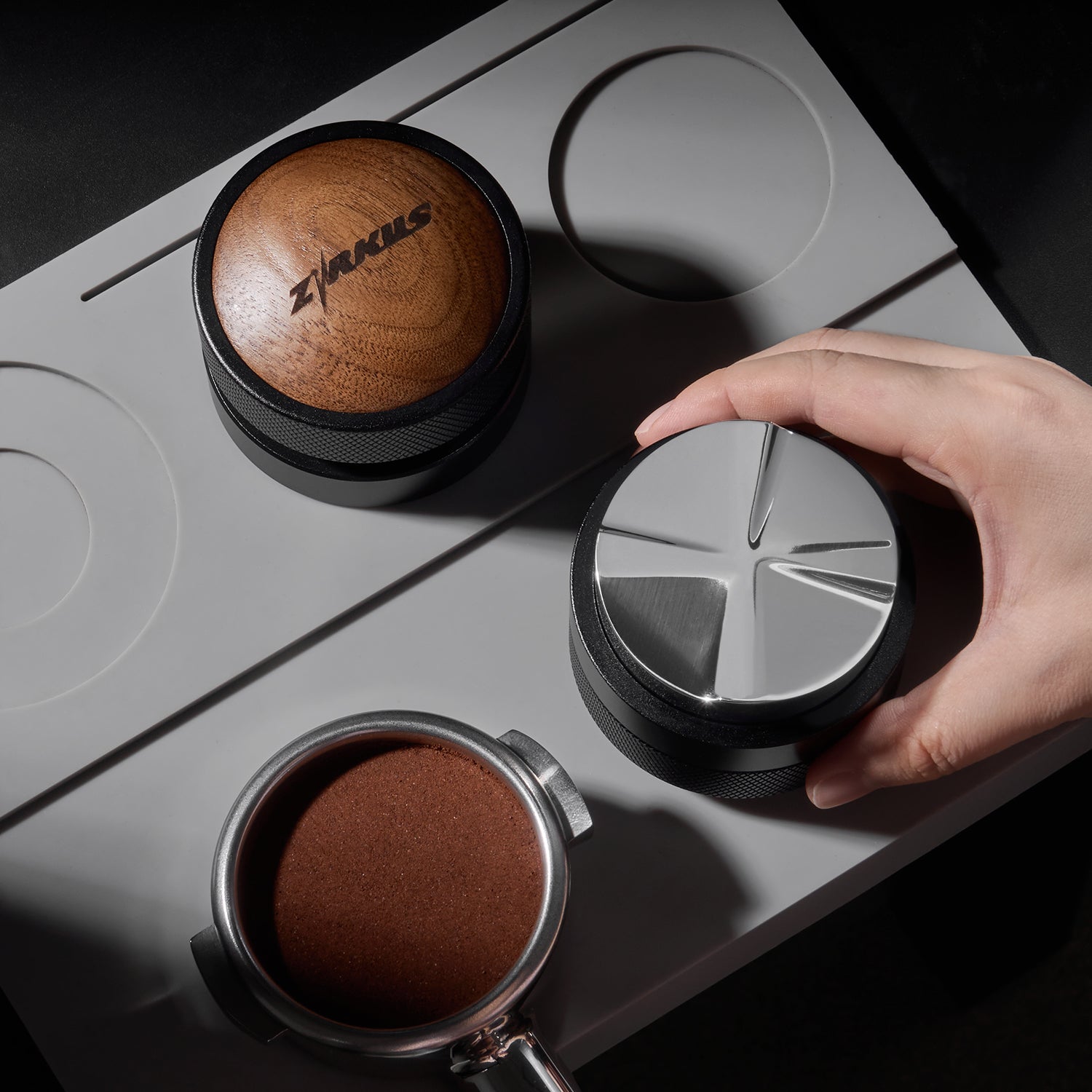
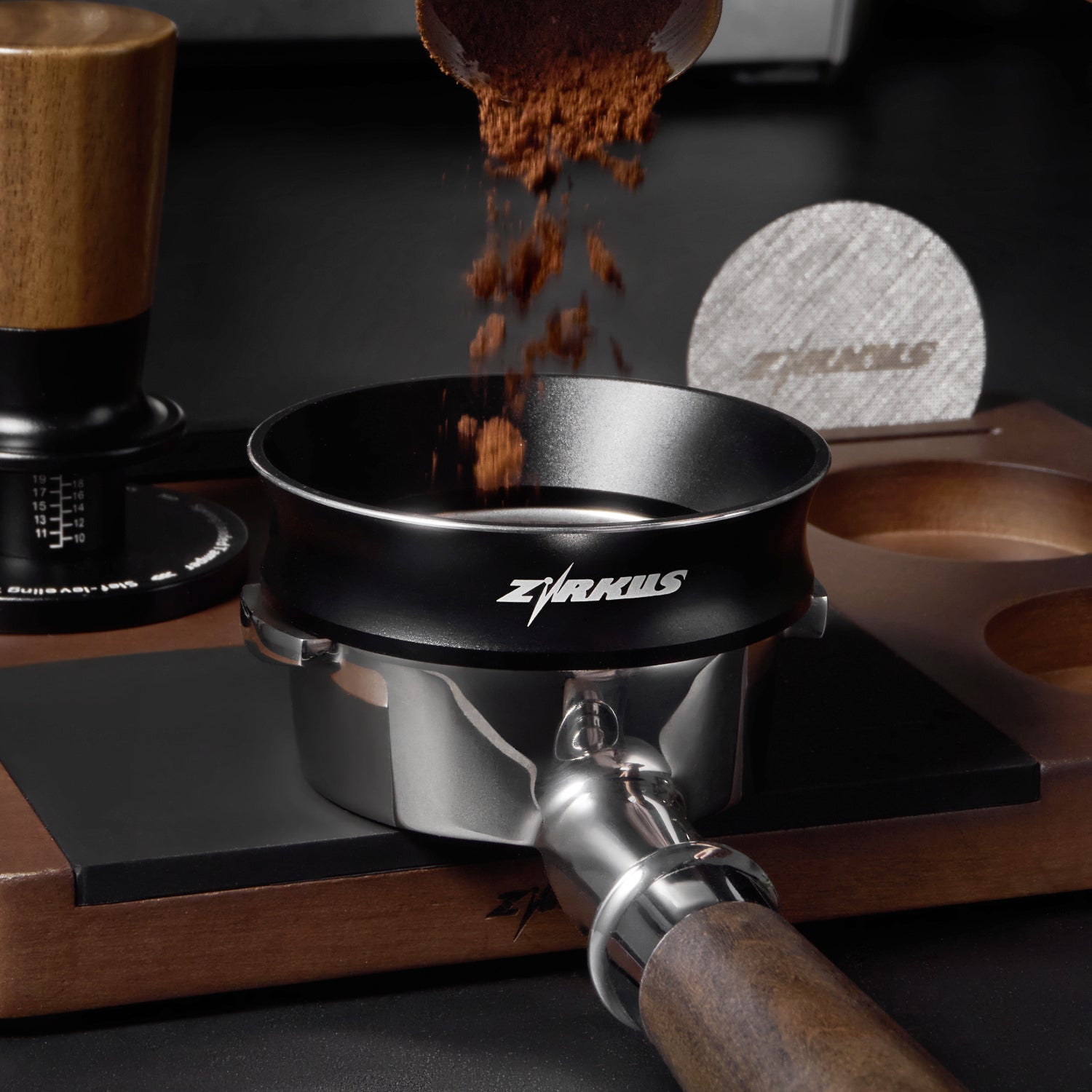
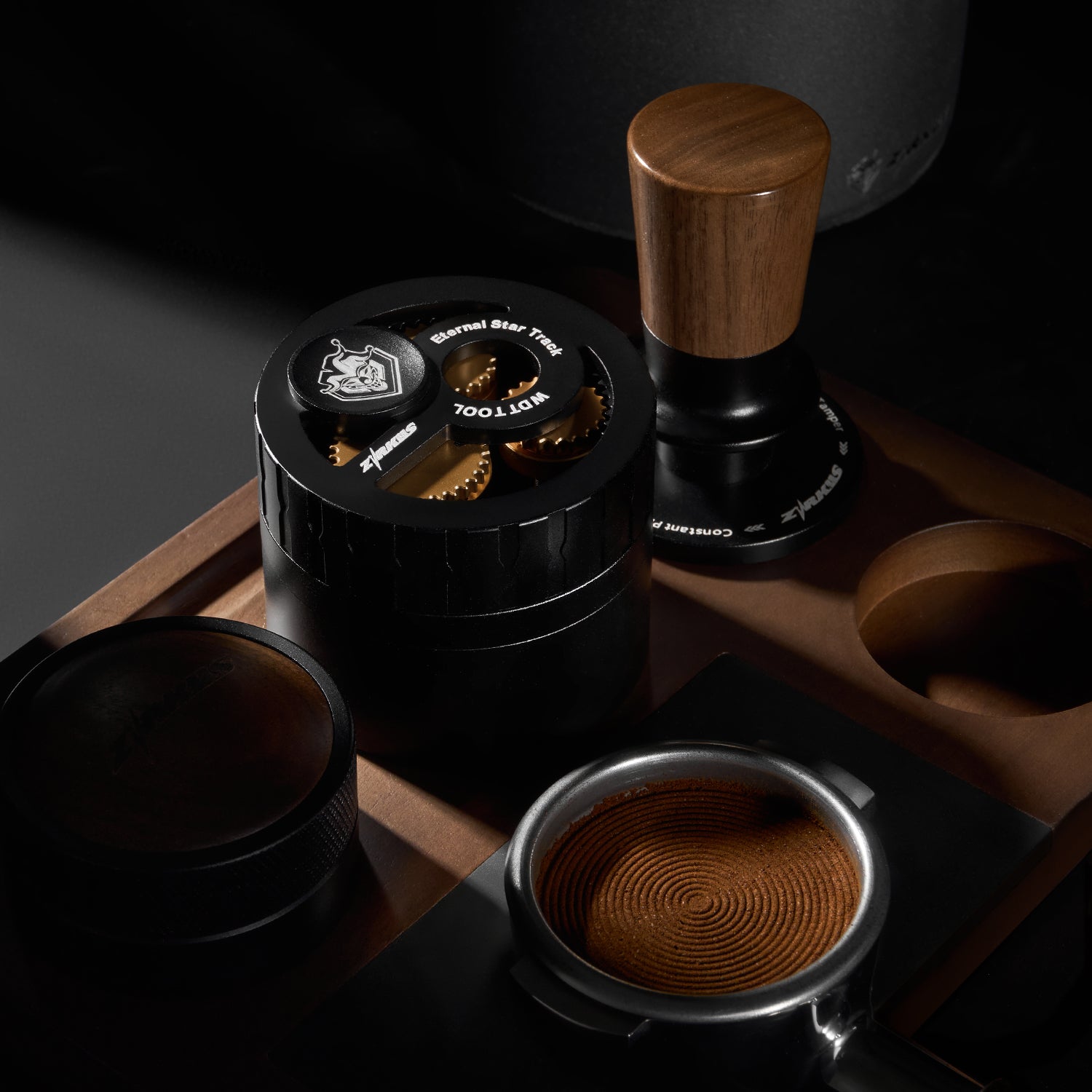
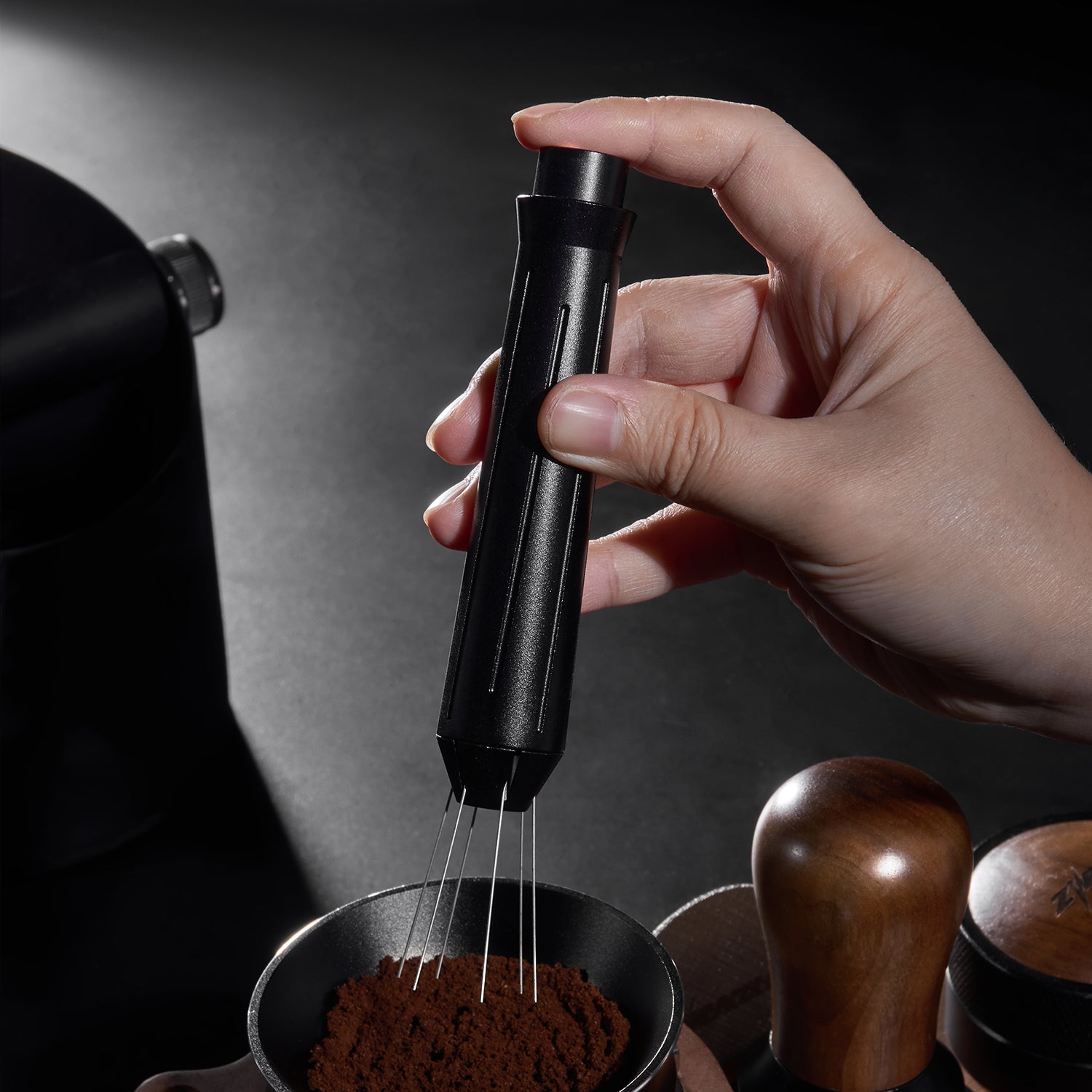
Distribution before tamping: Tools like WDT (Weiss Distribution Technique) or a dosing funnel address channeling before your tamper ever touches the puck. A perfectly distributed dose needs far less tamping finesse.

-
Arm and wrist position: Elbow directly above the portafilter, wrist neutral, motion straight down. This is almost never taught alongside the 30-lb number — and it matters far more.

What World-Class Baristas Actually Do

Watch footage from the World Barista Championships. You'll notice competitors spend much more time on distribution and leveling than on building pressure. Many top competitors have shifted toward calibrated (spring-loaded) tampers not because they've given up on the 30-lb ideal, but because they've realized that removing the pressure variable from the equation lets them focus entirely on what produces great coffee: even distribution and a level puck.
When pressure is handled automatically, the barista's full attention goes to grind adjustment, dose weight, and the sensory feedback of the shot. That's where the skill lives.
The Case for a Calibrated Tamper
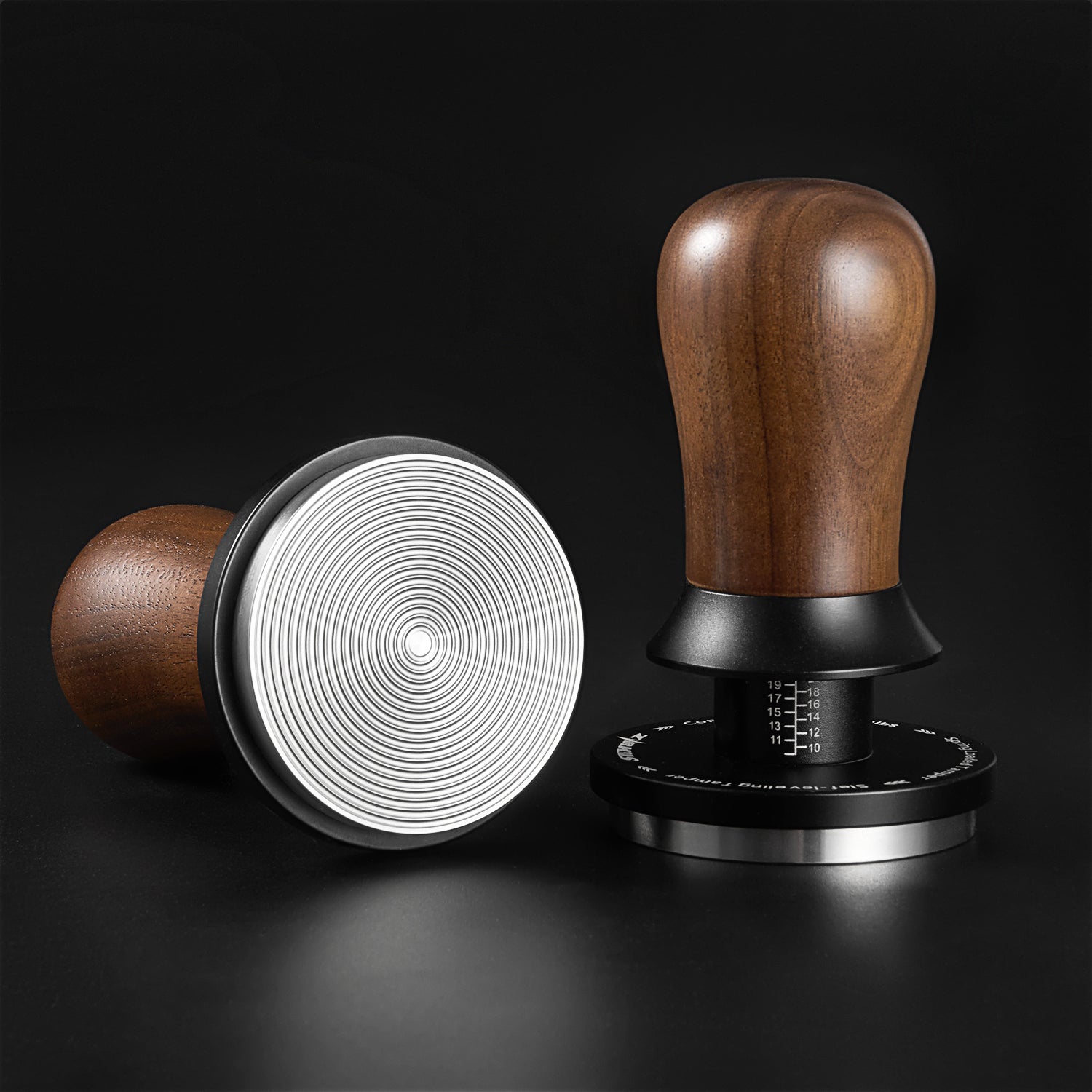
A spring-loaded or calibrated tamper engages at a preset pressure — often 30 lbs, sometimes adjustable — and clicks when that threshold is reached. The barista doesn't need to feel or estimate anything. The tool handles it.

Critics sometimes dismiss these as "beginner tools." In practice, they're used by some of the most technically precise baristas in the world — not because they can't tamp consistently by feel, but because removing a variable is always better than managing it.
The logic is simple: if 30 lbs is the target, a calibrated tamper hits it every single time. If consistency is the real goal — and it is — then a tool that guarantees consistency is the right tool. Relying on feel is the compromise, not the ideal.
So, Is 30 lbs the Golden Rule?
Not quite. Thirty pounds is a reasonable, well-tested starting point that produces good results when applied correctly. It's not arbitrary. But it was codified for the sake of teachability, and the coffee world gradually mistook the lesson aid for the lesson itself.
The real principle behind the 30-lb rule is this: be consistent. Tamp with the same pressure, the same angle, and the same technique every single time. Thirty pounds emerged as a way to approximate consistency. But there are better ways to guarantee it.
What to focus on instead?
- Is your distribution even before you tamp? Solve this first with WDT or a leveler.
- Is your tamper the right diameter for your basket — flat against the rim, no gaps?
- Are you tamping level? Arm vertical, elbow over the center of the portafilter.
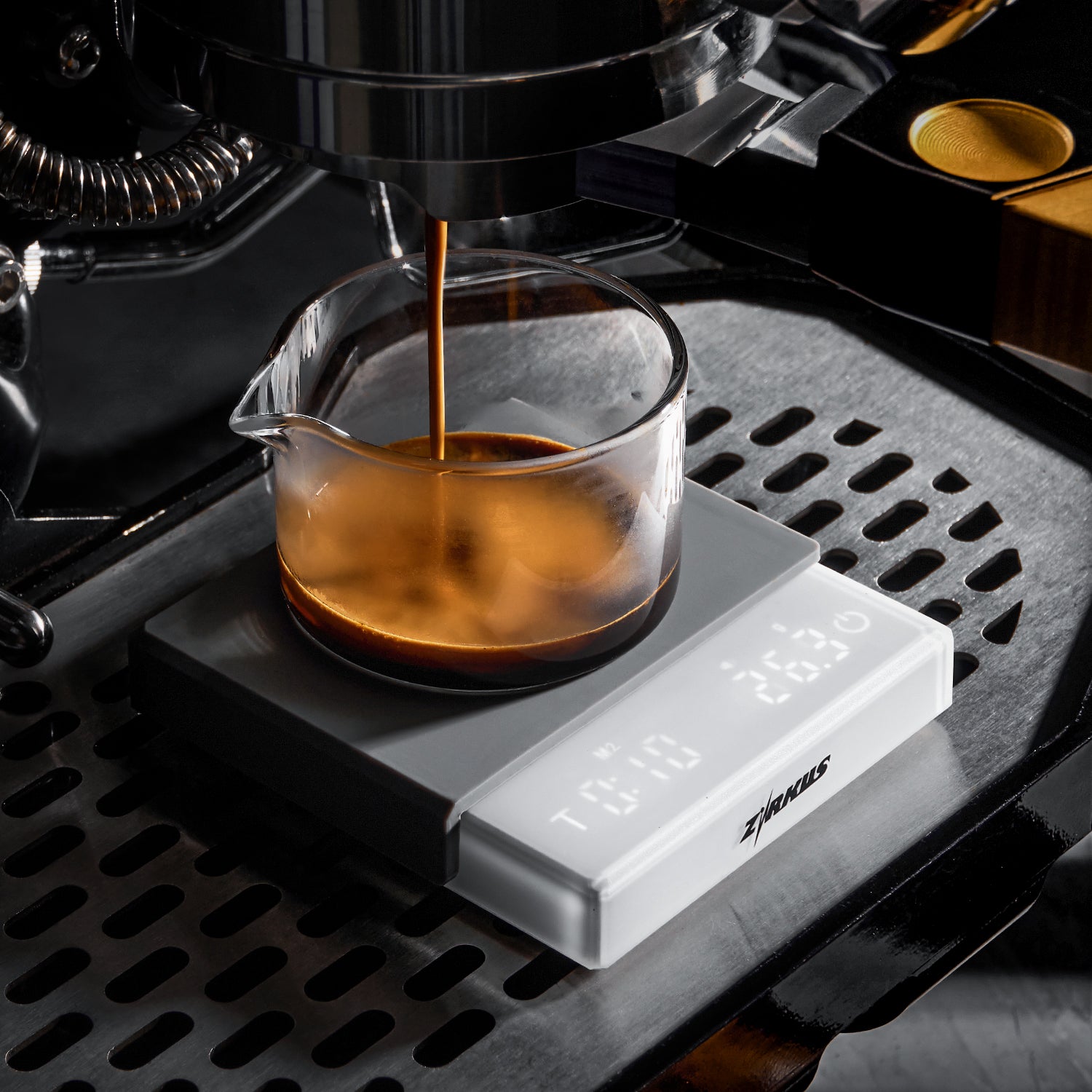
- Is your shot time landing in target range (typically 25–35 seconds for espresso)? If yes, your tamping is working — regardless of the exact pounds.
- Are you getting consistent results from shot to shot? Consistency, not pressure, is the measure of good tamping.
Thirty pounds is fine. Thirty pounds applied with a tilted wrist, a loose basket edge, and an uneven puck is not fine. The rule was always a proxy for something deeper: repeatability, precision, and attention to the variables that actually move the needle in the cup.
The best baristas aren't the ones who've memorized 30 lbs. They're the ones who've understood why it was suggested in the first place — and built a technique that makes the number irrelevant.
Take the guesswork out of tamping.
Zirkus precision tampers are engineered so that levelness and consistency are built into every press — not left to chance.


Written by ZirkusTeam



Leave a comment
This site is protected by hCaptcha and the hCaptcha Privacy Policy and Terms of Service apply.