

Article: The Ultimate Guide to Coffee Tamper: Types, Sizing, and Technique
The Ultimate Guide to Coffee Tamper: Types, Sizing, and Technique
If you' re chasing café-quality espresso at home, mastering how to tamp coffee is non-negotiable. A great coffee tamper turns loose grounds into a compact, even puck—and that small step makes or breaks your shot. Whether you' re shopping for a tamper for espresso coffee, upgrading from a basic plastic coffee machine tamper, or refining your tamping flow, this guide covers everything you need to know about espresso coffee tamper tools, sizes, materials, and pro technique.
What Does It Mean to Tamp Coffee?
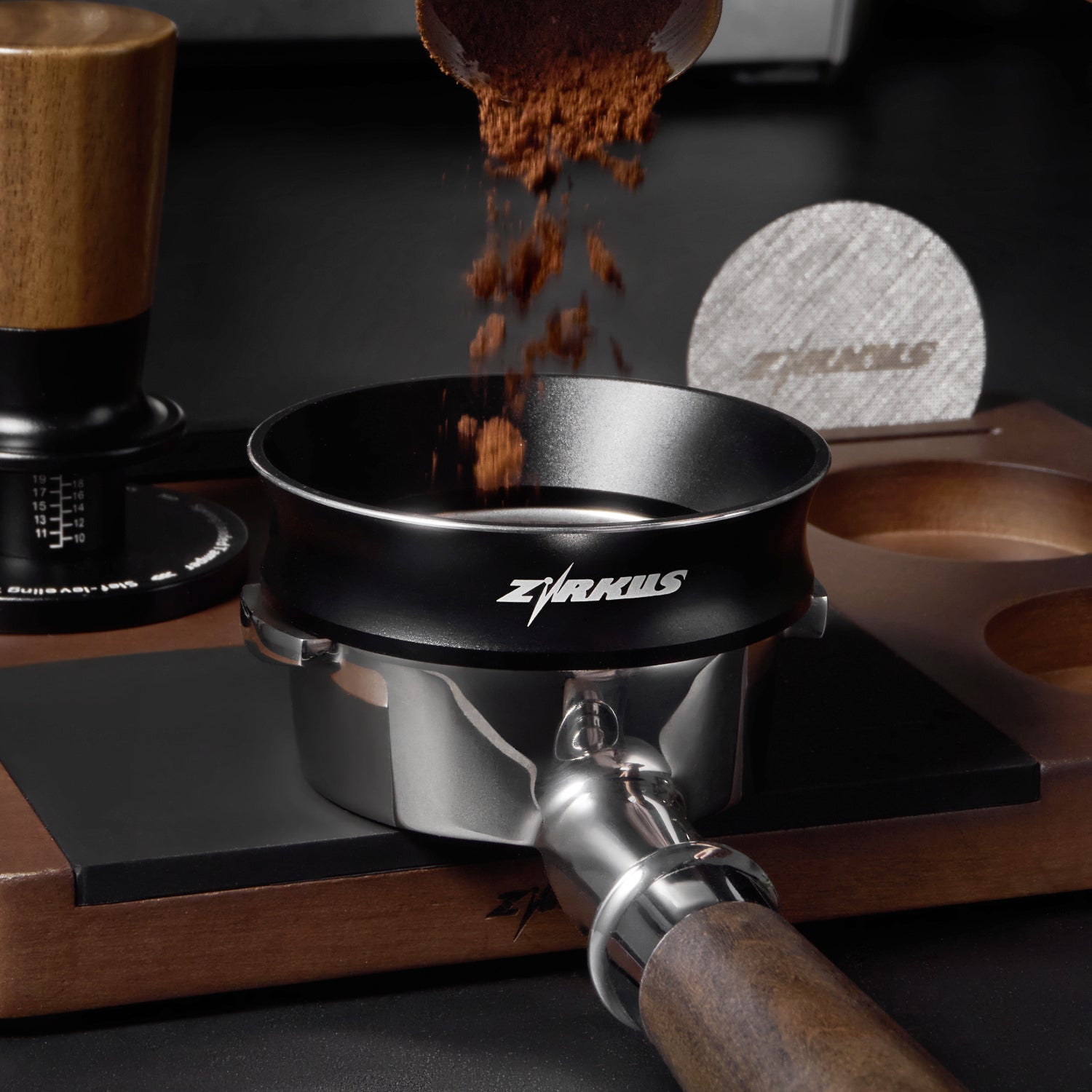
Tamping is the process of compressing ground coffee beans into a compact, level "puck" inside a portafilter basket before brewing. While it might look like you’re just squishing the coffee down, it is a critical mechanical step in the espresso-making process.
Think of it as the "quality control" stage: you are transforming a loose pile of grounds into a uniform barrier that controls how water interacts with the coffee.
What Is the Purpose of Tamping Coffee?
The reason we tamp isn't just to make the coffee fit; it’s about managing fluid dynamics.
- Creating Resistance: Espresso machines force water through the coffee at high pressure (usually around 9 bars). If the grounds are loose, the water will blast through them too quickly, resulting in a thin, sour, and under-extracted shot. Tamping creates a dense "wall" that forces the water to work to get through, extracting oils and flavors along the way.
- Preventing "Channeling": Water is lazy—it seeks the path of least resistance. If the coffee bed is uneven or has air pockets, water will rush through those gaps (a phenomenon called channeling). This leaves some grounds over-extracted and bitter, while the rest remain dry and wasted. A level tamp ensures the water flows evenly through the entire puck.
Every home barista needs a reliable espresso tamper to nail this step—far more effective than the flimsy plastic tampers included with most machines.
What Is a Coffee Tamper?
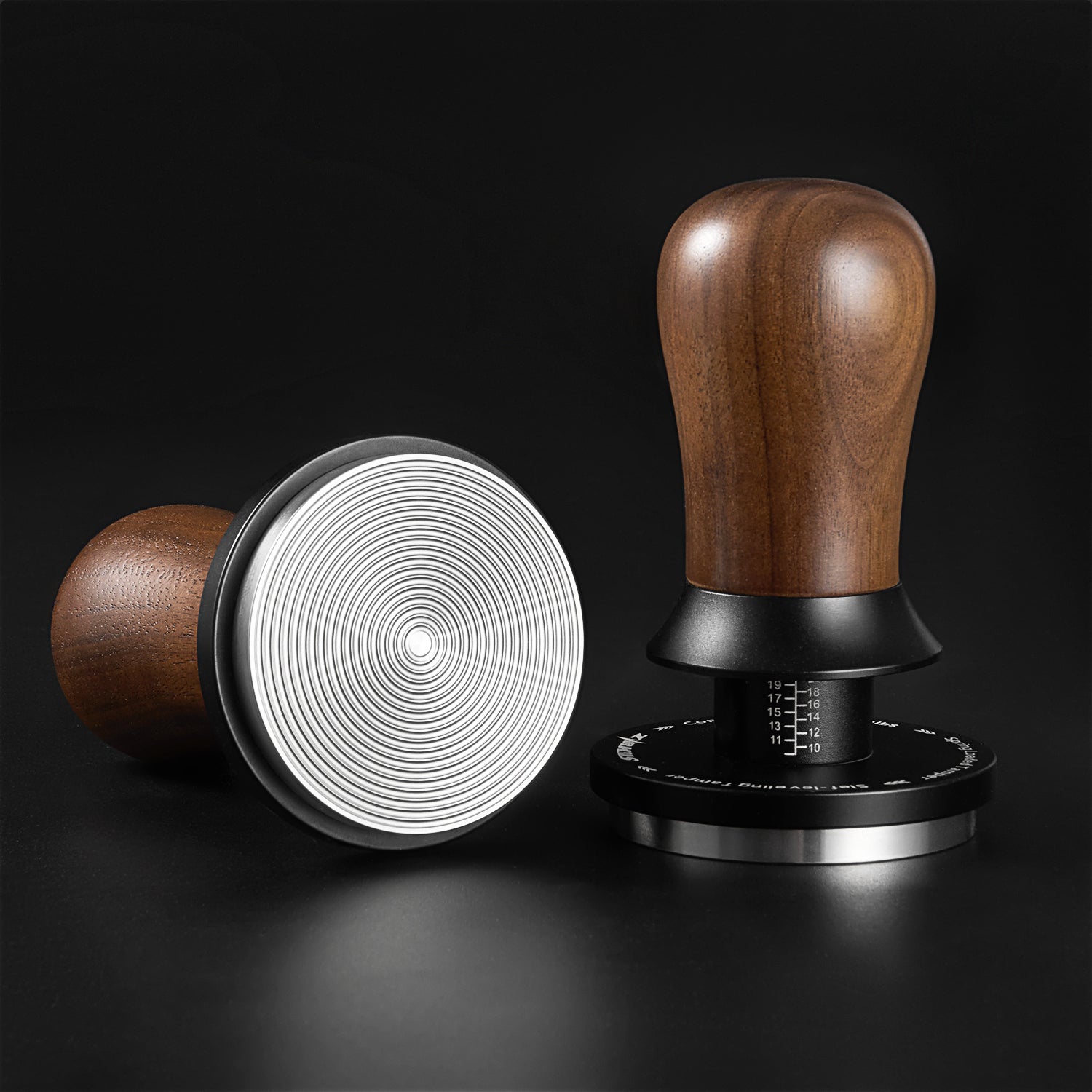
A coffee tamper is a precision tool with two core parts: a comfortable handle and a flat, rigid base. It’s designed to fit snugly inside your portafilter basket to compress grounds evenly.
A quality espresso coffee tamper is a smart investment compared to cheap plastic options. It delivers consistent pressure, stands up to daily use, and helps you pull professional-level shots at home. Look for durable builds like stainless steel coffee tamper models for long-lasting performance.
How Many Types of Coffee Tampers Are There?
Tampers come in several styles to match skill level, preference, and consistency needs.
1. The Classic Manual Tamper
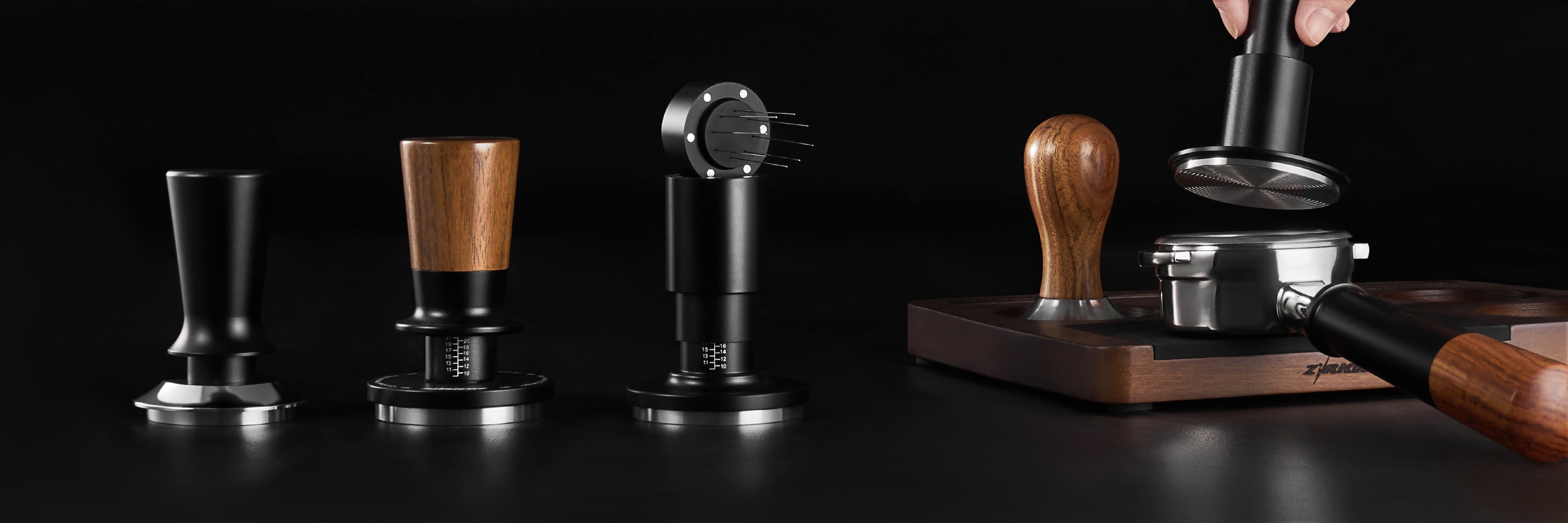
The manual coffee tamper is a fixed-base, hand-operated tool. It gives you full control over pressure and angle, making it a favorite for traditionalists and experienced home baristas. A solid barista coffee tamper often falls into this category, built for precision and feel.

2. Spring-Loaded Coffee Tamper
A spring loaded coffee tamper delivers calibrated pressure every single time—usually 25–30 lbs—no matter how hard you push. This makes it perfect for beginners or anyone who wants zero guesswork. It’s a top choice for a calibrated coffee tamper setup.


3. Force Impact Tamper
Force Impact Tamper is an advanced upgrade to the Spring-Loaded Coffee Tamper. It features an internal “click” mechanism that audibly signals when tamping is complete, ensuring perfect compression every time. This tool delivers a level, professional-grade puck with consistent results, blending enhanced ease and precision for superior performance.


4. Palm Tampers (Distributor/Leveler Combos)
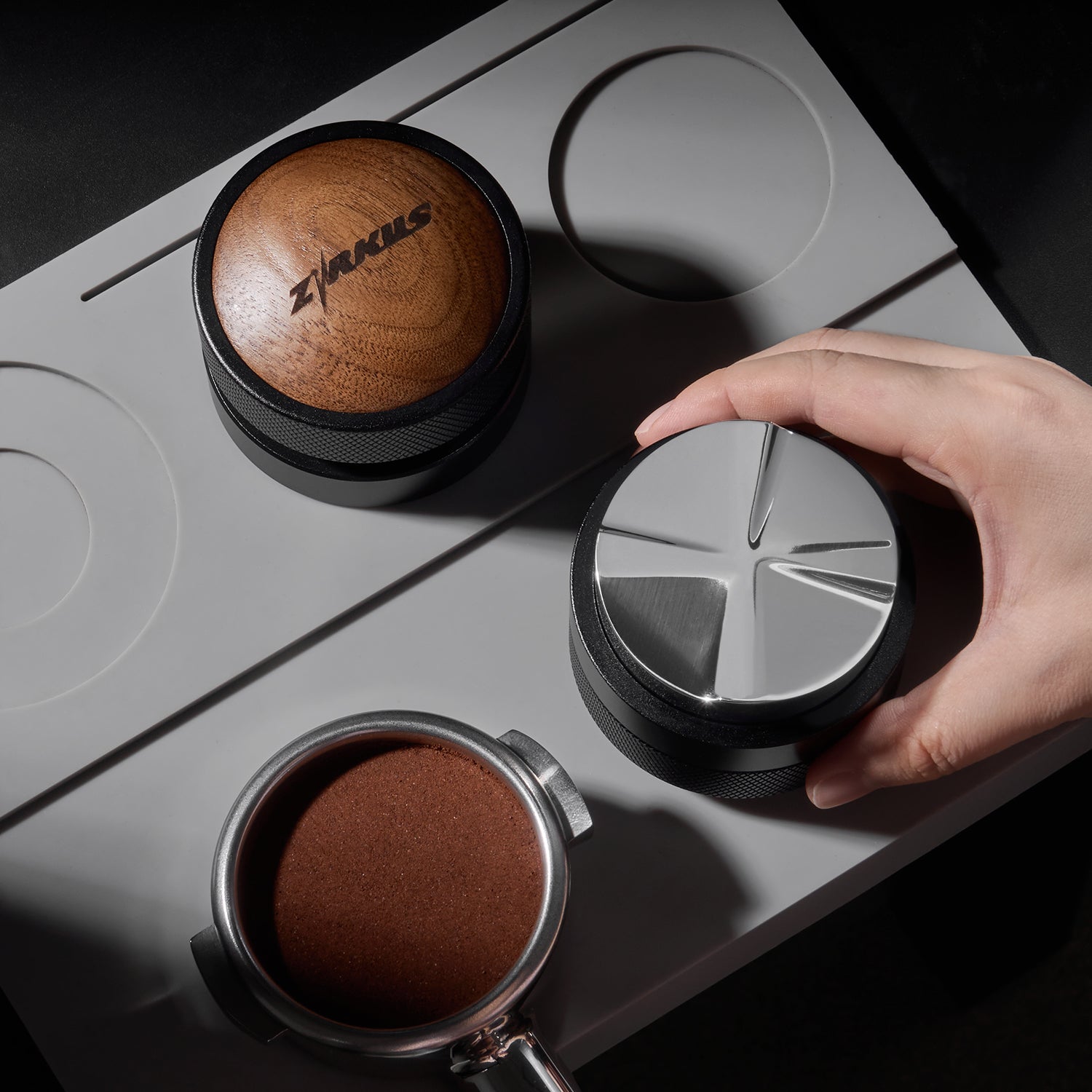
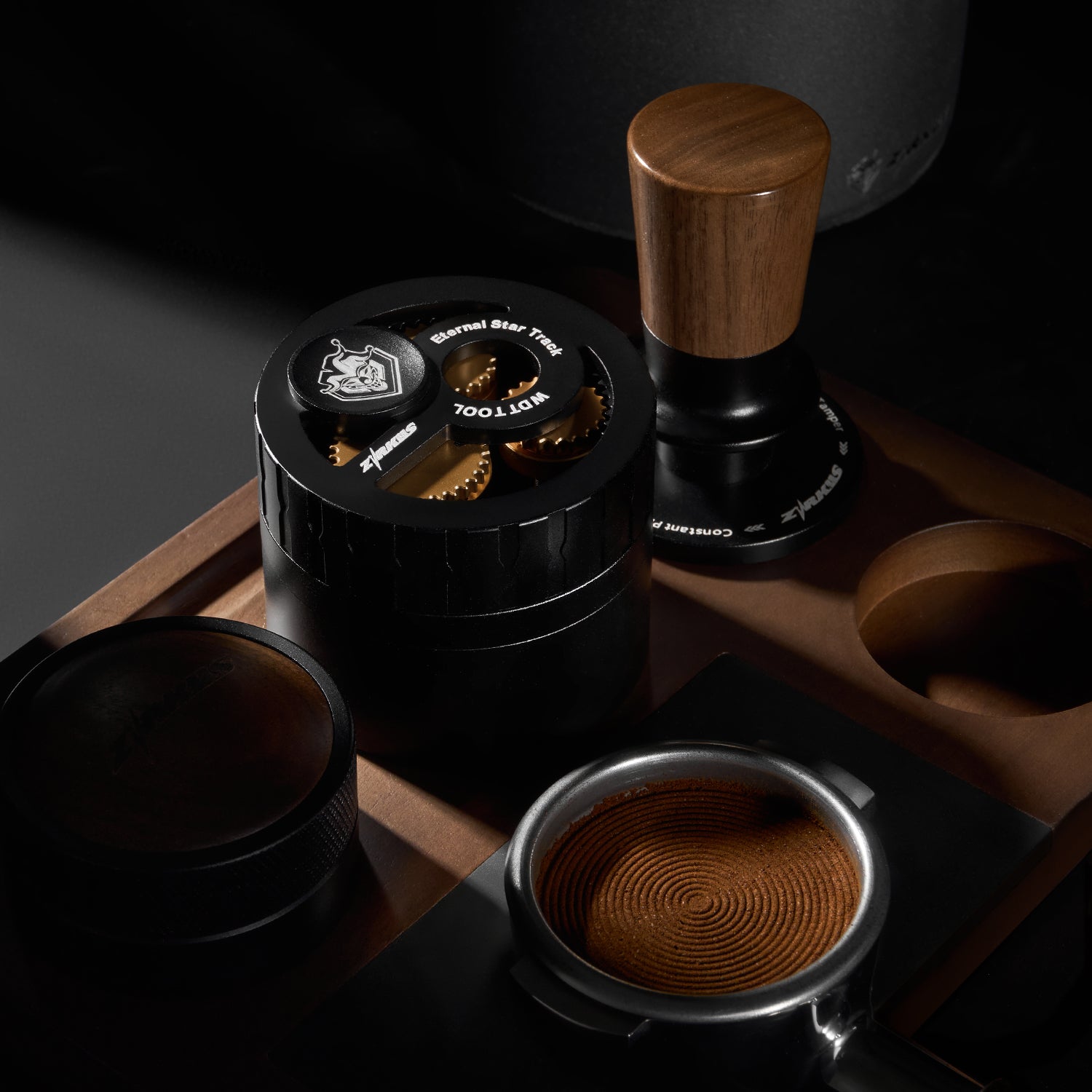
Palm tampers are low-profile, ergonomic options that double as distributors. Many models act as a self leveling coffee tamper (or self leveling espresso tamper), keeping the base flat automatically to avoid tilted pucks.

The Science: How Tamping Affects Coffee
Tamping directly controls density and flow rate. An under-tamped puck lets water flow too fast, leading to weak, watery espresso. An over-tamped puck restricts flow too much, causing bitter, over-extracted shots.
Visual cues of a bad tamp include:
- Uneven color in the espresso stream
- Watery, thin shots
- Channeling (visible water gaps in the puck)
Choosing the right espresso tamper sizes and using steady technique fixes these issues instantly.
How to Use a Coffee Tamper Like a Pro
Follow this step-by-step method for perfect tamping with any coffee tamper for espresso:
-
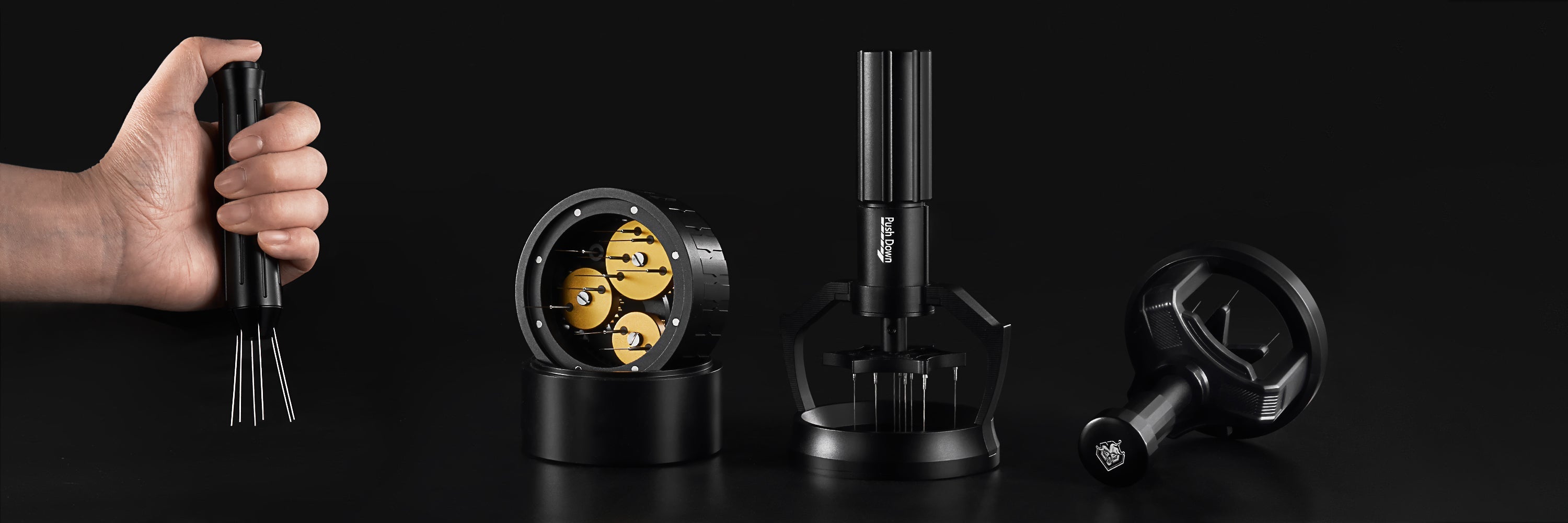
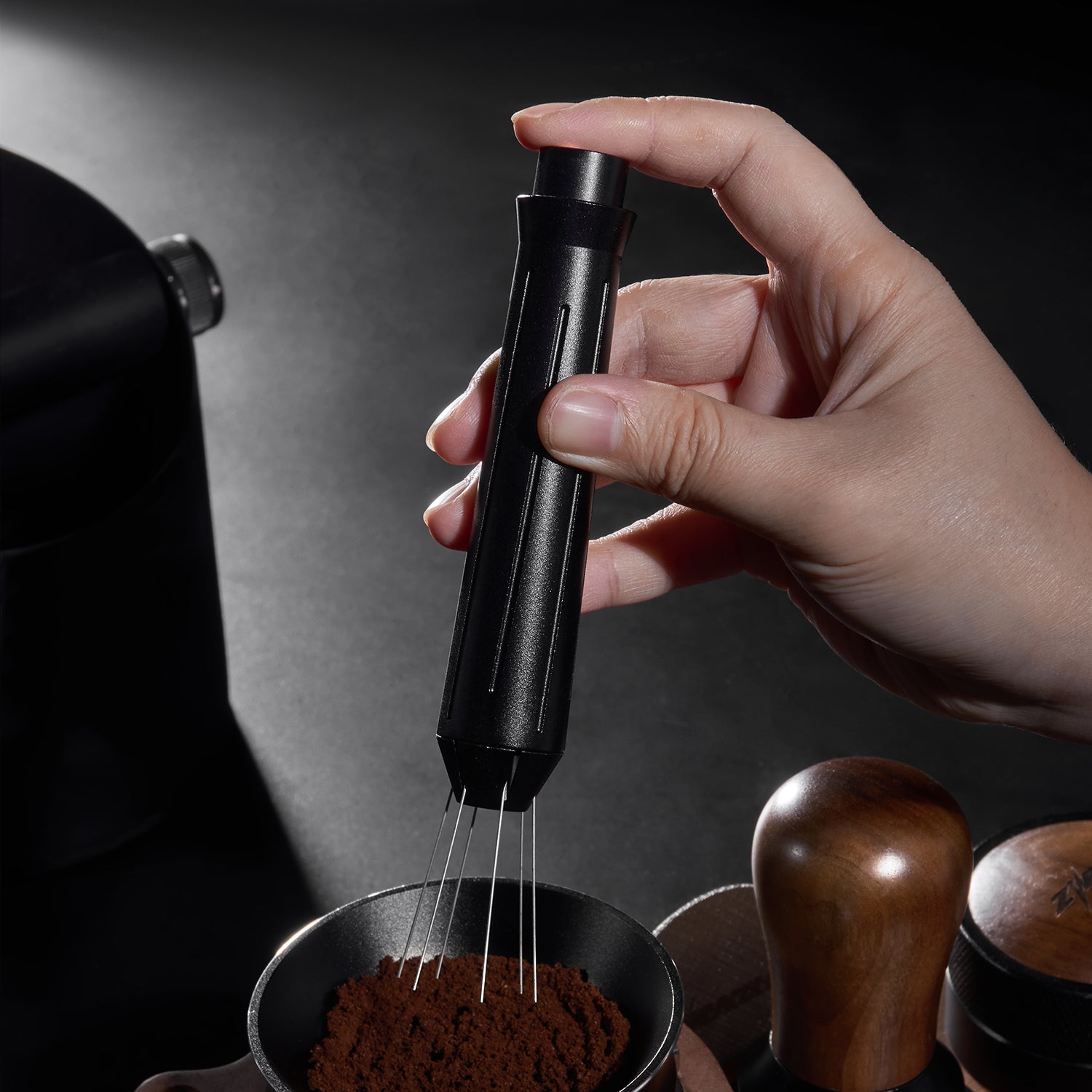
Level the grounds: Use a WDT tool to break up clumps and create an even bed.

-
Grip correctly: Hold your espresso tamper press with a “door knob” or pistol grip—keep your wrist straight.

-
Vertical press: Push straight down, no twisting. Apply steady, even pressure until the puck feels firm. It doesn't necessarily require 30lbs of pressure, just evenness.

-
Clean finish: Lift the tamper straight up; avoid spinning or scraping the puck.

How Hard Do You Tamp Coffee?
Forget the strict “30 lbs” myth. Consistency and a level surface matter more than raw force. A calibrated coffee tamper removes the guesswork, but even a manual coffee tamper works great with steady, repeatable pressure.
What Size Coffee Tamper Do I Need?
Espresso tamper sizes must match your portafilter basket—even 1mm off causes uneven extraction. To find the right tamper size, you first need to identify the inner diameter of your espresso machine's filter basket. While 58mm is the "industry standard," many home machines use smaller sizes like 51mm or 54mm.
Common Tamper Sizes by Brand
|
Brand / Machine Type |
Portafilter Size |
Recommended Tamper Size |
|
E61 Group Heads |
|
58.5mm |
|
Gaggia |
|
58.5mm |
|
Rancilio |
|
58.5mm |
|
Breville / Sage |
|
53.3mm |
|
Breville / Sage |
|
58.5mm |
|
De'Longhi |
|
51mm |
|
La Pavoni |
|
51mm |
|
La Pavoni |
|
49mm |
How to Measure if You’re Unsure
If your machine isn't listed above, do not rely on a standard ruler; even a 1mm difference will make a tamper unusable.
-
Use Calipers: Measure the inner diameter of the filter basket at the top rim.

- The "Tolerance" Rule: Your tamper should be approximately 0.5mm smaller than the basket's inner diameter to prevent it from getting vacuum-sealed or stuck inside the basket.
- Check the Manual: Most modern manufacturers list the "nominal size" (e.g., 54mm) in the technical specifications.
How to Clean Your Coffee Tamper
Simple, regular cleaning keeps your tamper hygienic and prevents old coffee oils from ruining your espresso flavor.
Daily Quick Clean (After Every Use)
- Tap the tamper gently to knock off loose coffee grounds.
- Wipe the flat base with a dry or slightly damp microfiber cloth.
- For stuck grounds, use a small soft nylon brush to sweep away residue.
Weekly Deep Clean (For Oil Buildup)
- If your tamper has a detachable handle, separate the base from the handle.
- Soak the stainless steel base in warm water + a drop of mild dish soap for 5–10 minutes.
- Gently scrub the base with a soft toothbrush to remove old coffee oils and grime.
- Rinse thoroughly with clean water.
- Dry immediately with a lint-free cloth, then let it air-dry completely to avoid water spots or rust.
Care for Different Handle Materials
- Wooden handles: Never soak — only wipe with a damp cloth and dry right away. Apply food-safe wood oil occasionally to protect the wood.
- Plastic/ABS handles: Clean with mild soapy water only; avoid harsh chemicals.
- Silicone grips: Wash with warm soapy water and air-dry fully.
What to Avoid
- Do not use abrasive sponges, scouring pads, or metal brushes (they scratch the tamper base).
- Do not use bleach, strong detergents, or citrus cleaners (leaves bad tastes and damages materials).
- Do not put your tamper in the dishwasher—especially models with wood or coated handles.
- Do not leave the tamper wet for long periods (causes rust, mold, or wood swelling).
Where to Buy a Coffee Tamper
For the best selection of barista coffee tamper tools, shop our curated collection of precision espresso tampers. Zirkus offers:


FAQs
Q1. What is a coffee tamper and why do I need one for espresso?
A coffee tamper compresses grounds into a level puck. It prevents channeling, ensures even extraction, and is essential for rich, balanced espresso.
Q2. How do I choose the right espresso tamper sizes for my machine?
Match your portafilter: 51mm for entry-level, 54mm for Breville, 58mm for professional E61 machines. Common sizes: 51mm, 53mm, 54mm, 58mm.
Q3. What’s the difference between manual and spring loaded coffee tamper?
Manual espresso tamper gives full control. Spring loaded coffee tamper delivers fixed calibrated pressure automatically for consistent results every time.
Q4. Is a calibrated coffee tamper better for consistent espresso?
Yes. Calibrated espresso tamper ensures uniform pressure, reduces human error, and helps you pull steady, café‑quality shots at home.
Q5. How hard should I tamper coffee for the best extraction?
Focus on consistency and a level surface, not strict force. A firm, even press works better than chasing a fixed 30-lb pressure number.
Q6. What’s the most popular size: 58mm coffee tamper or 54mm coffee tamper?
58mm coffee tamper is the industry standard for pros. 54mm coffee tamper is the most common for popular home espresso machines.
Q7. How to clean and maintain a stainless steel coffee tamper?
Wipe the base clean and dry after use. Do not wash in the dishwasher. A coffee tamper stainless steel base stays hygienic and durable with simple care.
Q8. What is a self leveling coffee tamper good for?
Self leveling espresso tamper automatically keeps the base flat, avoiding tilted pucks and making perfect tamping much easier for beginners.
Conclusion
A great espresso tamper and consistent tamping technique turn average espresso into exceptional coffee. From choosing the right coffee tamper size to mastering the vertical press, every detail boosts flavor balance and crema quality.
Practice your technique, pick a tamper that fits your machine and style, and you’ll pull café-worthy shots every time.

Written by ZirkusTeam

Leave a comment
This site is protected by hCaptcha and the hCaptcha Privacy Policy and Terms of Service apply.