

Is a Bottomless Portafilter Better?
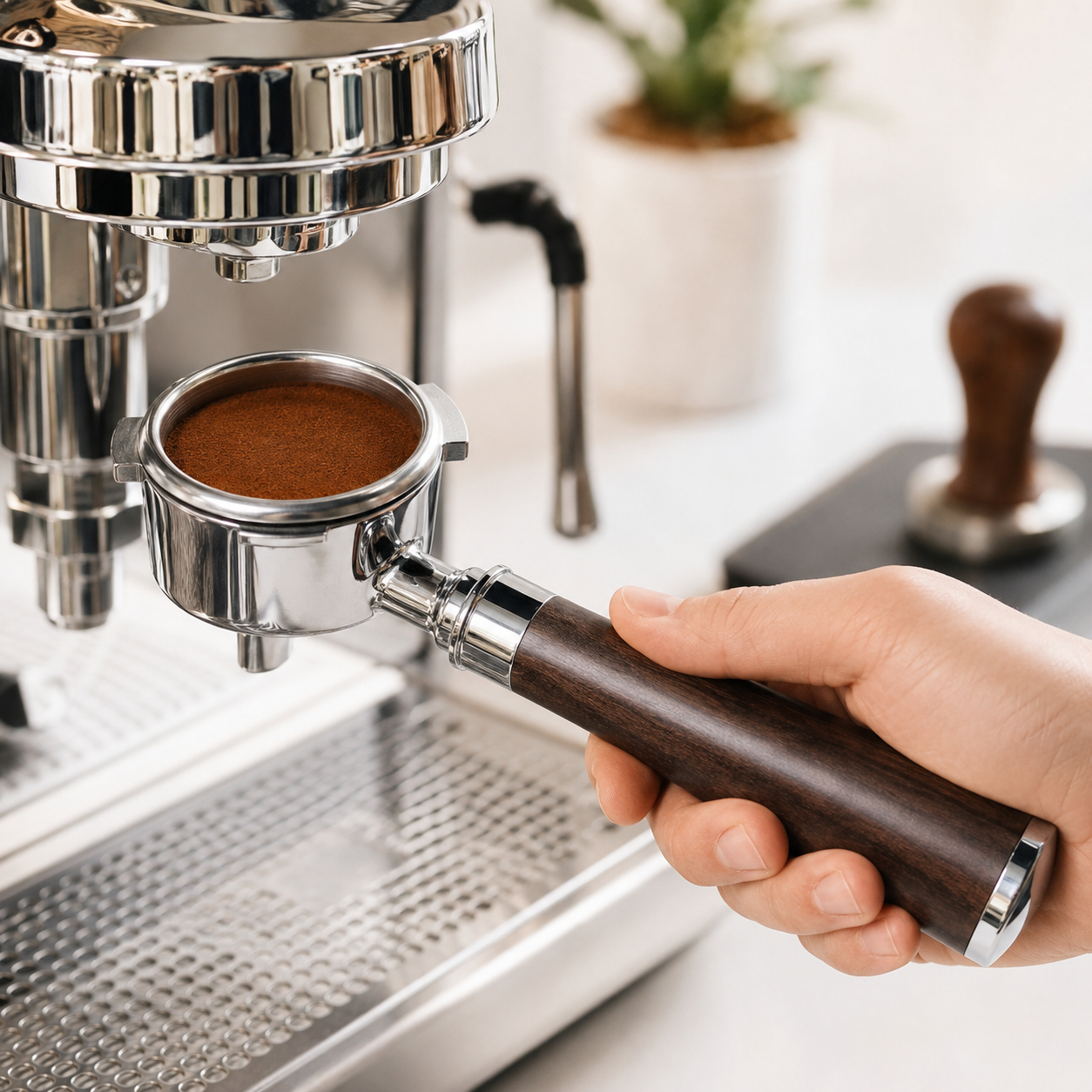
A bottomless portafilter gives you an unobstructed view of espresso leaving the filter basket. Also called a naked portafilter, it removes the enclosed base and spouts found beneath a traditional basket. That simple design change makes extraction problems easier to see, but does it actually produce better coffee?
The honest answer is nuanced. A bottomless portafilter can help you improve your technique, yet it cannot correct an unsuitable grind, uneven distribution, or an inconsistent dose. Think of it as a diagnostic window rather than an espresso upgrade button.
Is a bottomless portafilter better? The short answer
A bottomless portafilter is better for observing extraction, identifying visible channeling, and refining puck preparation. It does not automatically make espresso taste better. Its value comes from showing you what happens beneath the basket so you can make informed adjustments.

A spouted portafilter directs espresso into one or two controlled streams. A bottomless model exposes the basket, allowing you to see where coffee first appears, whether the flow develops evenly, and whether concentrated jets spray sideways. Breville and Barista Hustle both describe this open design as a tool for observing and diagnosing espresso flow problems. (Breville, Barista Hustle)

Therefore, “better” depends on your goal. If you want cleaner service and easy shot splitting, a spouted portafilter may be better. If you want immediate feedback on your preparation, the bottomless version has the advantage.
What “better” means for a bottomless portafilter?
Before comparing designs, define what better means. We evaluate espresso tools according to four practical criteria:
- Espresso quality: Does the tool produce a more balanced, enjoyable drink?
- Extraction consistency: Does it help you repeat successful shots?
- Diagnostic visibility: Can it reveal problems that would otherwise remain hidden?
- Ease of use: Does it make the daily workflow cleaner or more convenient?
A bottomless portafilter performs exceptionally well on visibility. Its effect on consistency depends on how you use that information. Its effect on flavor is indirect. Ease of use is mixed because an even extraction can look elegant, while a poorly prepared puck can spray coffee across the machine and counter.
This distinction matters. Equipment should be judged by the problem it solves, not by how impressive it looks in a slow-motion espresso video.
Does a bottomless portafilter make better espresso?
Not by itself. The basket, coffee, grind, water, pressure, temperature, dose, and puck preparation determine how extraction develops. The bottomless body sits beneath the basket and lets the resulting liquid fall directly into the cup.
Removing the spouts does not redistribute the grounds or make every part of the coffee bed equally resistant to water. If you compare a compatible bottomless and spouted portafilter using the same basket and preparation, the main functional difference is visibility and how the finished espresso reaches the cup. This is an inference from the designs, not evidence that every portafilter body will perform identically. Basket fit, thermal condition, and manufacturing tolerances still matter.
A bottomless portafilter can nevertheless improve espresso over time. It creates a feedback loop:
- You prepare the puck.
- You observe the extraction.
- You identify a likely weakness.
- You adjust one variable.
- You confirm the result by measuring and tasting the next shot.
The better coffee comes from the improved process, not simply from removing the spout.

Why a bottomless portafilter is better for diagnosing extraction?
With a spouted model, espresso collects beneath the basket before leaving through the spout. Uneven streams can merge before you see them. A bottomless design exposes several useful signals:
- Coffee appearing much earlier in one area
- Persistent bare areas beneath the basket
- Several streams that fail to converge
- Pale or fast-flowing sections
- Thin jets spraying sideways
- Flow that remains strongly off-center
These signs can indicate uneven resistance within the puck. Water tends to move more readily through weaker areas, although the visible symptom does not always reveal the precise cause.
That final caveat is important. Barista Hustle distinguishes obvious visible channels from smaller variations in flow that may not be visible at all. A shot can look beautiful and still extract unevenly. Appearance is evidence, not a final verdict. (Barista Hustle)
How to identify channeling with a bottomless portafilter?
Use a controlled observation process:
- Prepare and lock in the portafilter. Keep the basket rim clean and avoid knocking the prepared puck.
- Start the shot and watch for the first drops. Note whether they appear across a broad area or concentrate immediately in one spot.
- Observe how the flow develops. The streams will often gather toward the center, but persistent empty sections or highly uneven flow deserve attention.
- Look for spraying or sudden pale jets. Flair identifies spraying as a common symptom associated with low dose, an overly coarse grind, or poor distribution. (Flair Espresso)
- Compare the image with measurable results. Record the dose, beverage yield, and extraction time, then taste the espresso.
Do not diagnose channeling from a single drop landing slightly off-center. Basket geometry, machine position, and surface level can also influence what you see.
How to use bottomless portafilter feedback to improve a shot?
Once you see a problem, resist the temptation to change everything.
- Change one variable at a time. Otherwise, you will not know which adjustment helped.
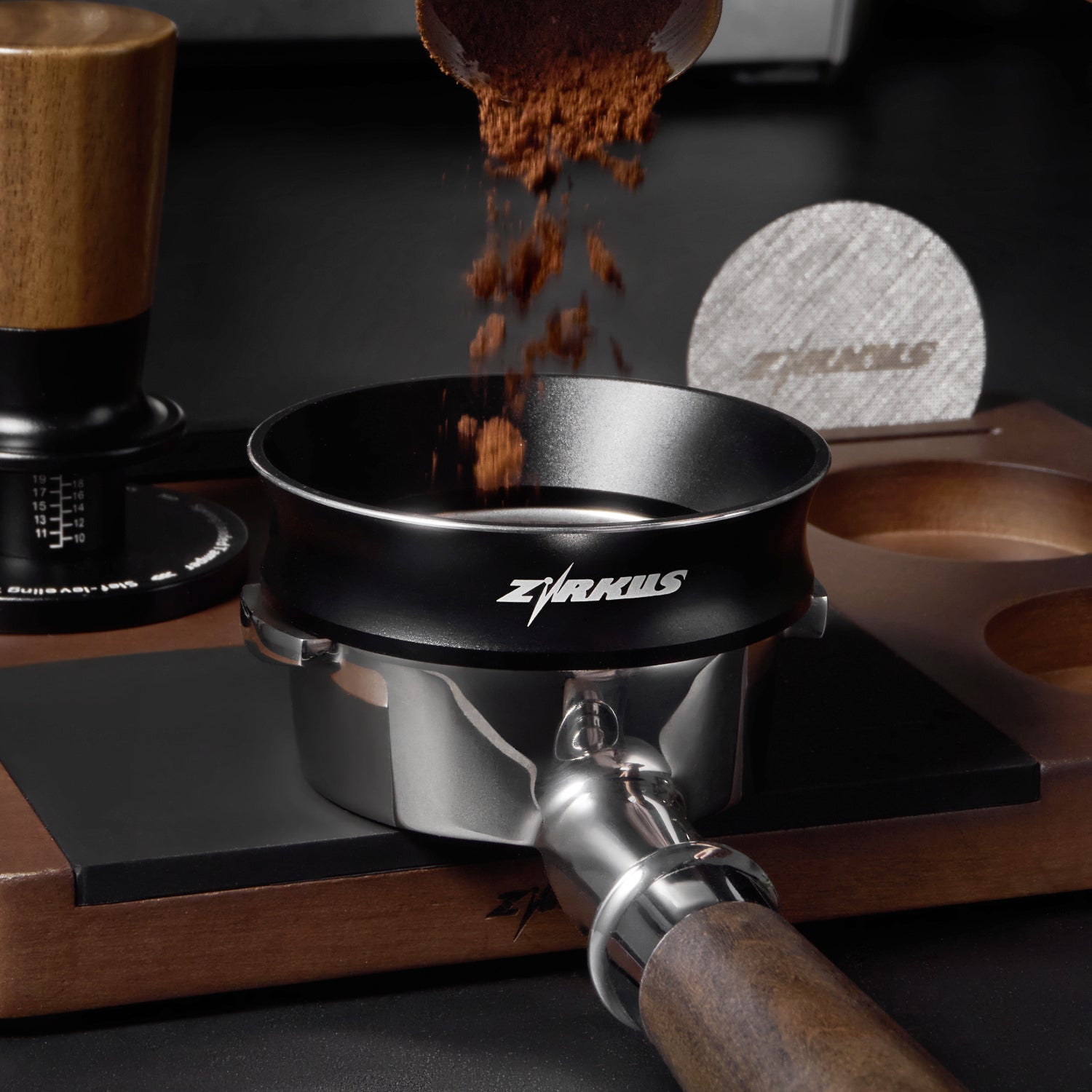
- Check distribution first. Make sure the grounds fill the basket evenly before tamping.
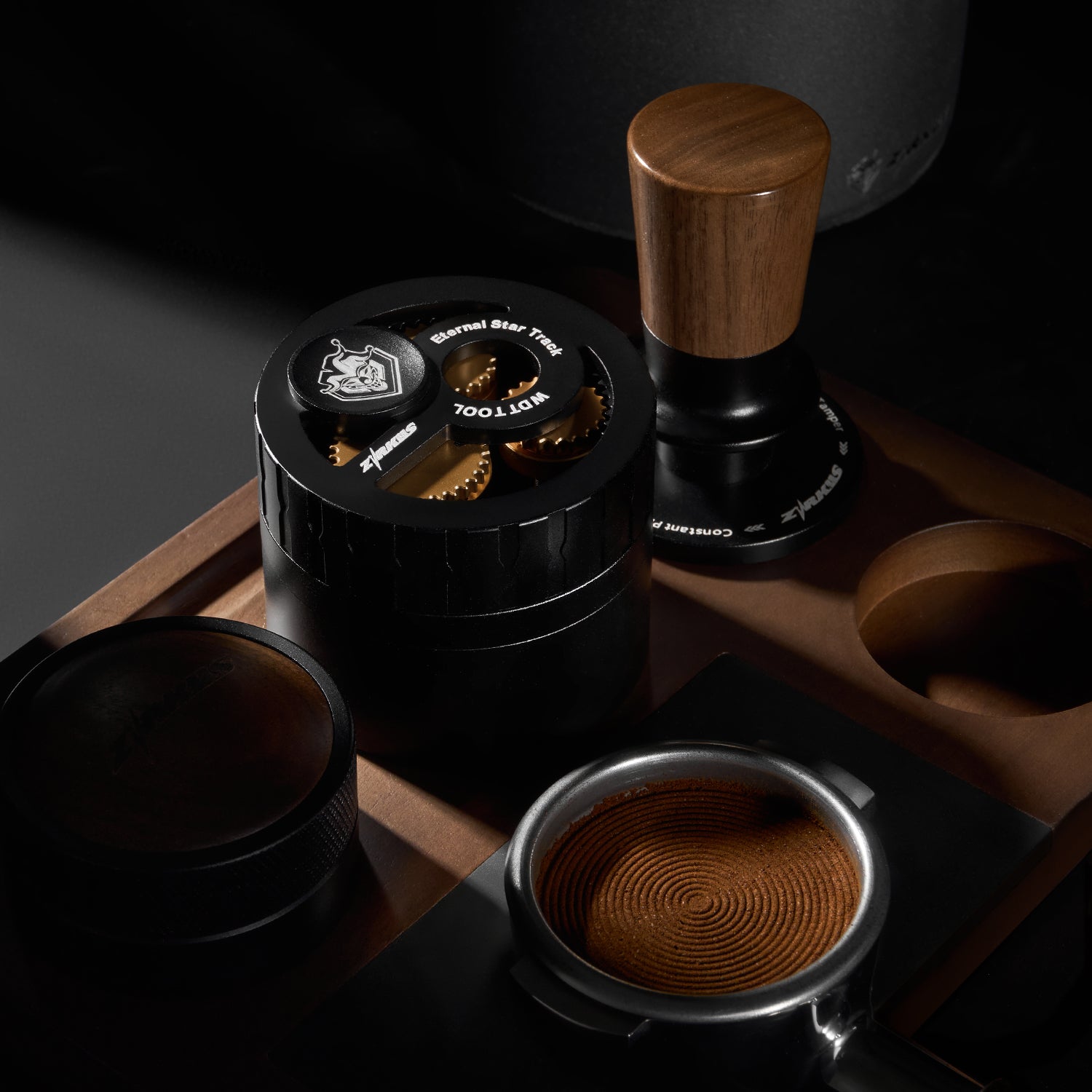
- Tamp level and consistently. The goal is a stable, level coffee bed, not a theatrical display of force.
- Adjust the grind when the entire shot runs too quickly or slowly. A finer grind generally adds resistance, while a coarser grind reduces it.
- Repeat the same dose and target yield. This makes the next shot comparable.
- Use taste as the final test. A more attractive extraction is valuable only if it also produces a better cup.
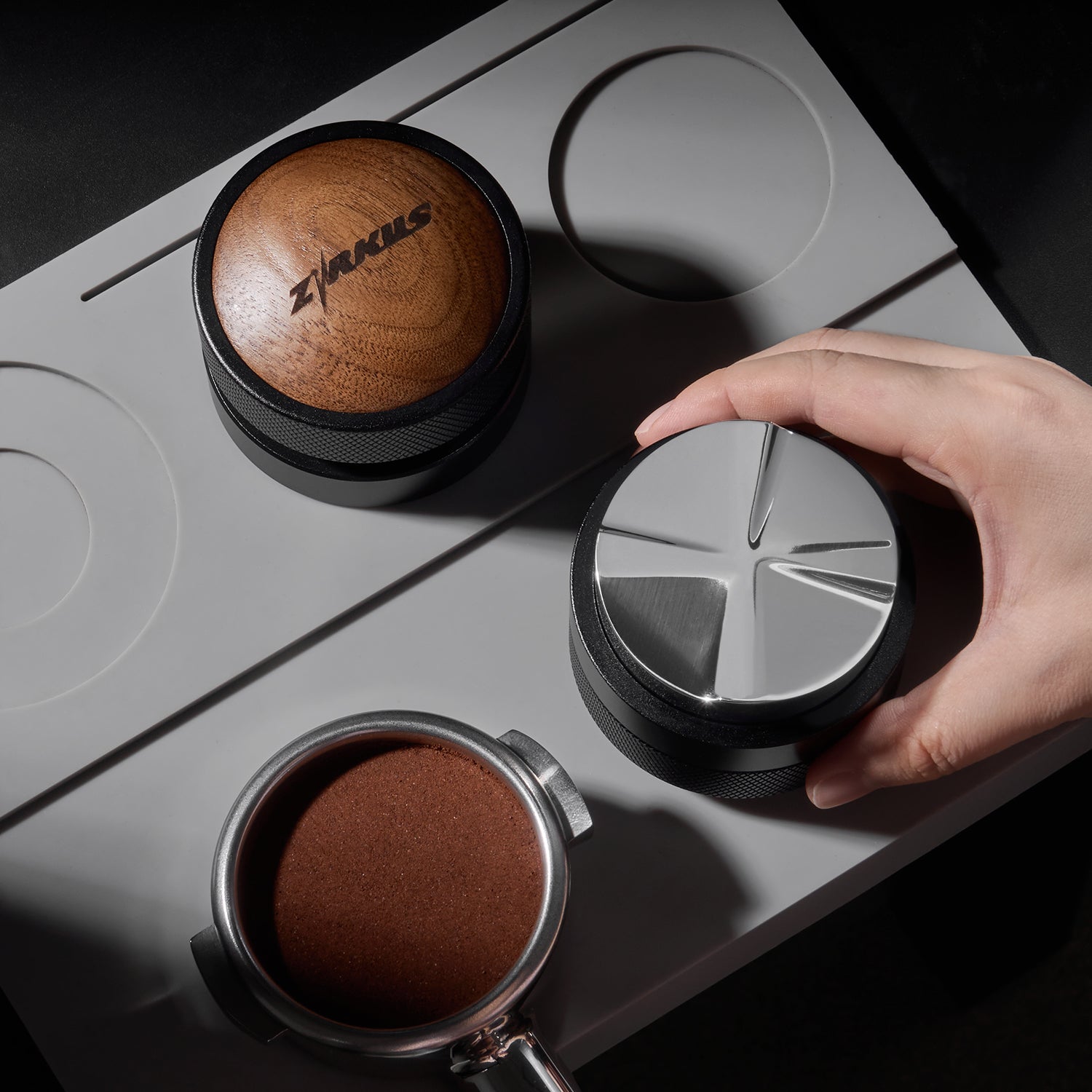
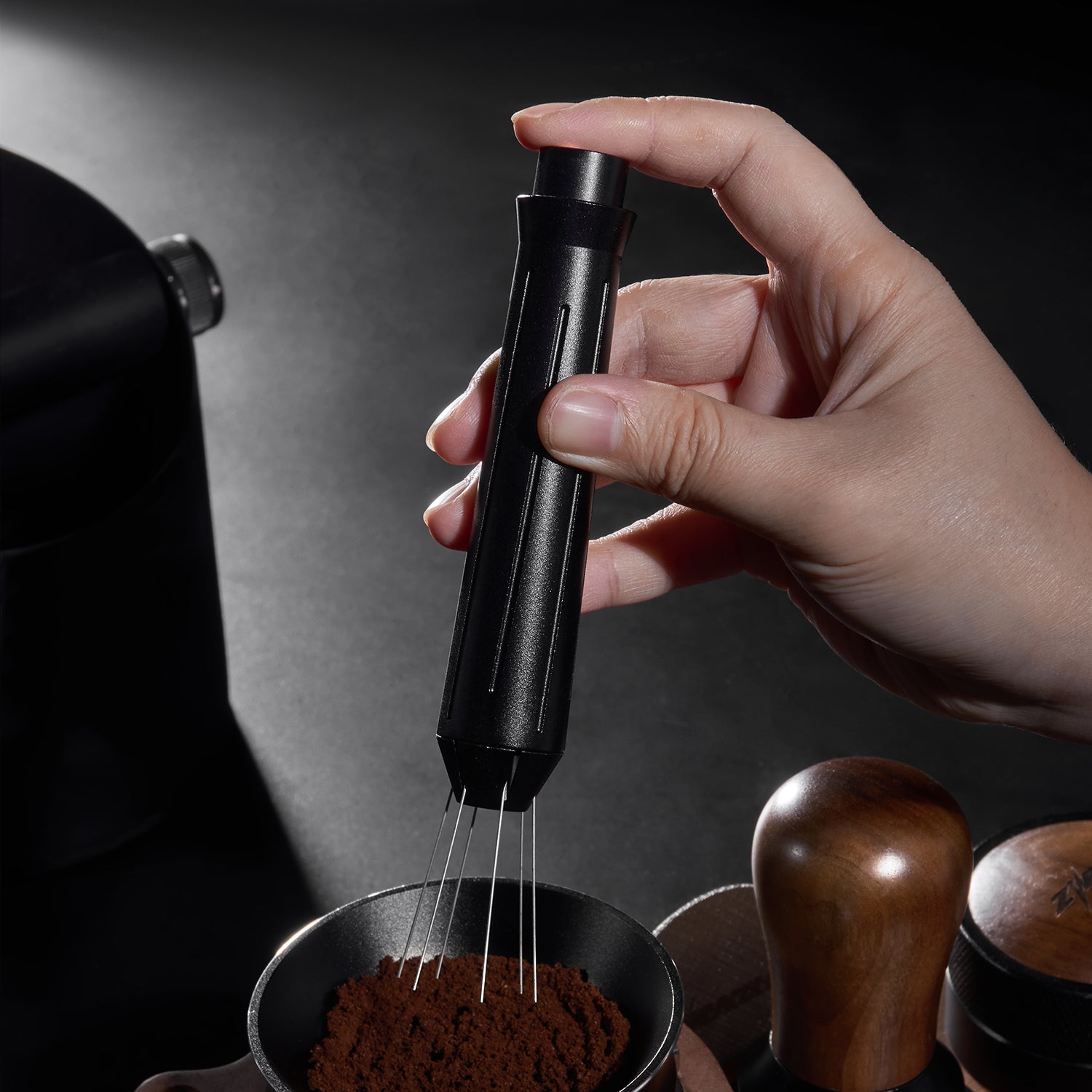
If clumps or uneven density are recurring problems, the Weiss Distribution Technique may help. This method uses fine needles to stir grounds in the basket. Barista Hustle reports that deep stirring can reduce shot-to-shot variation in puck resistance, although technique and grinder quality still affect the outcome. (Barista Hustle)
Explore our espresso distribution tools to find WDT tools designed to break up clumps and distribute grounds more evenly before tamping.

When a bottomless portafilter produces more consistent espresso?
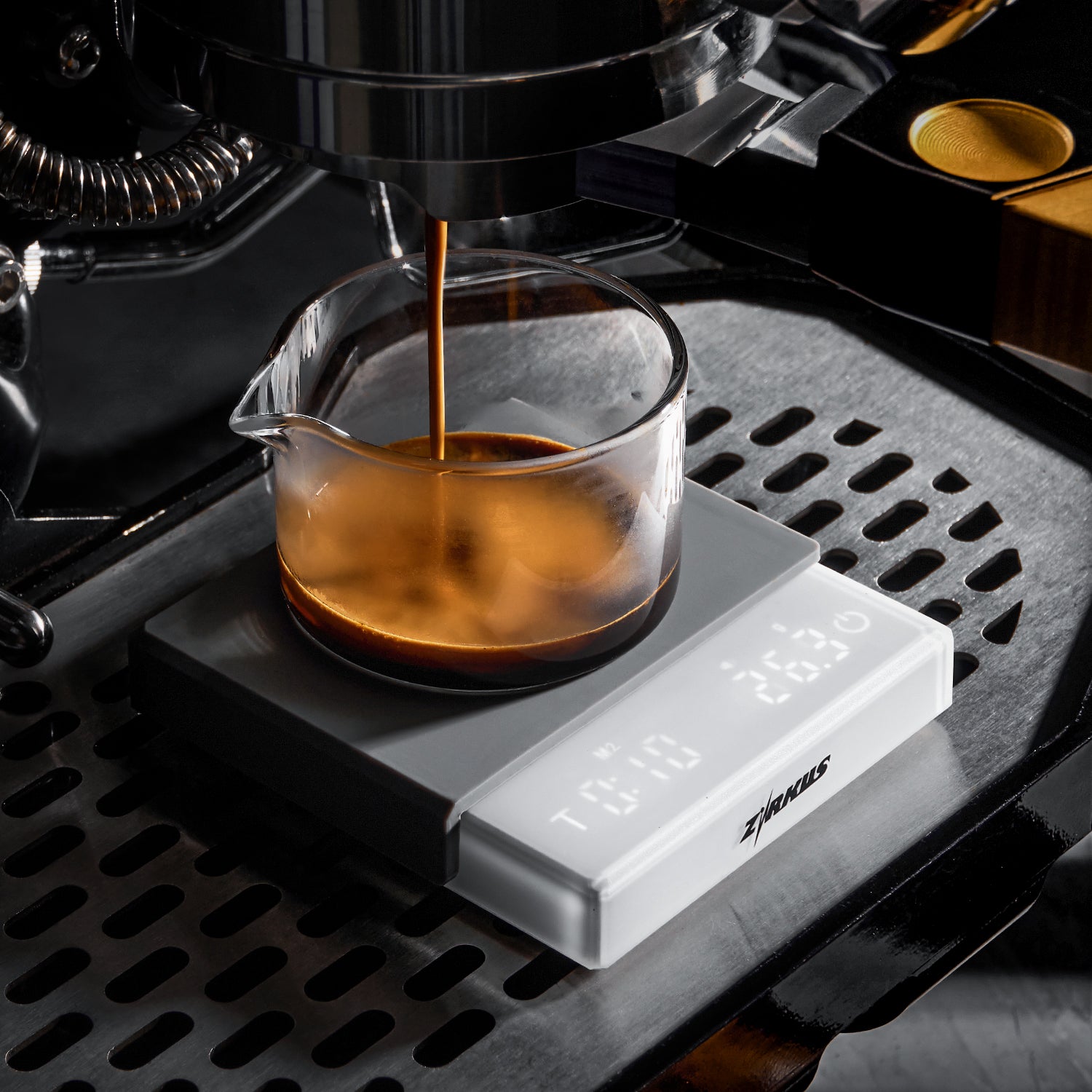
Consistency improves when the portafilter becomes part of a measured routine. You need a repeatable dose, a stable target yield, a capable grinder, and controlled puck preparation. A reliable scale makes this process easier by helping you repeat the same dose and beverage yield. Browse our espresso scales for options suited to measuring espresso accurately within a compact drip-tray space. And the exposed basket then helps you compare one extraction with the next.
For example, suppose several shots spray from the same side. You inspect your distribution, correct a recurring low-density area, and repeat the recipe. If spraying decreases and the espresso tastes more balanced across multiple attempts, the bottomless portafilter has helped you isolate a useful change.
However, a centered cone is not proof of perfect extraction. Small channels can remain invisible, while visually uneven shots can occasionally taste good. Evaluate three forms of evidence together:
- What you see
- What you measure
- What you taste
This three-part standard is more reliable than chasing a photogenic shot.
Is a bottomless portafilter better than a spouted portafilter?
| Criterion | Bottomless portafilter | Spouted portafilter |
|---|---|---|
| Extraction visibility | Excellent | Limited |
| Diagnostic value | High | Low |
| Forgiveness | Low | Higher |
| Mess during poor shots | Greater | Better contained |
| Direct effect on flavor | Minimal | Minimal |
| Learning value | High | Moderate |
The bottomless design wins as a learning tool. The spouted design wins when workflow control matters more. Spouts contain errant flow and can direct a double extraction into two cups. Decent Espresso specifically notes that a bottomless portafilter cannot split a shot between two cups. (Decent Espresso)
A bottomless body may also accommodate deeper baskets that do not fit inside some enclosed portafilters. That is a compatibility benefit, not a guarantee of better extraction. For instance, Gaggia’s 58 mm bottomless model is designed to accept baskets of different depths and includes an 18-gram basket. Fit still depends on the machine, group design, locking tabs, and gasket. (Gaggia North America)

Is a bottomless portafilter better for beginners?
It can be, especially for a beginner who wants to understand espresso rather than simply produce it.
The immediate feedback shortens the distance between an error and its visible consequence. Uneven distribution may create an uneven flow pattern. An unsuitable grind may produce a shot that gushes or stalls. That relationship is easier to study when the basket is exposed.
The tradeoff is frustration. Beginners are still learning to manage dose, grind, distribution, tamp, yield, and timing. Adding visual analysis can feel like watching six warning lights at once. Spraying is also messier without an enclosed base.
A bottomless portafilter suits beginners who are willing to weigh inputs and outputs, take brief notes, and make controlled adjustments. Someone who values a tidy, forgiving routine may prefer to learn with the included spouted portafilter first.
When a bottomless portafilter is not better?
A bottomless portafilter is not necessarily the better choice when:
- You regularly divide one extraction between two cups.
- You prioritize a clean counter and fast workflow.
- Your grinder produces highly inconsistent grounds.
- You do not intend to measure dose or beverage yield.
- You are satisfied with your espresso and do not need more diagnostic information.
- The available bottomless model is not confirmed as compatible with your machine.
It is also a poor substitute for fundamentals. An exposed basket cannot repair stale coffee, an unsuitable basket dose, weak temperature control, or an inconsistent grinder.
Most importantly, do not let visual perfection become the entire goal. Espresso is a drink, not a screensaver.
Is a bottomless portafilter better for your espresso routine?
Choose a bottomless portafilter if you want to diagnose visible channeling, refine puck preparation, and build a more repeatable technique. It is particularly useful when you enjoy testing one variable at a time.
Keep using a spouted portafilter if you split shots, value clean service, or want a straightforward morning routine. Owning both can be sensible because they serve different jobs.
Before buying, confirm the diameter, tab position, group-head compatibility, basket depth, and whether a basket is included. A label such as “58 mm” does not prove universal compatibility. Machine-specific fit is more important than handle material, color, or social-media appeal.
Ready to find the right setup for your espresso routine? Explore our portafilter collection to compare bottomless and spouted options for different machines and brewing preferences. Before ordering, check your espresso machine’s group-head size, locking-tab configuration, and model compatibility. The best portafilter is not simply the most attractive one. It is the one that fits securely and supports the way you prepare espresso every day.

Final verdict: Is a bottomless portafilter actually better?
A bottomless portafilter is better at teaching you what your espresso preparation is doing. It reveals visible flow problems that a spouted body can conceal and gives you immediate feedback for improving distribution, grind, and tamping consistency. It is not inherently better at extracting coffee, and it cannot guarantee better flavor. Choose it when you want a diagnostic instrument. Choose a spouted portafilter when you want containment, convenience, or two-cup service. The strongest espresso routine does not treat either design as magic. It uses the right tool, controls the variables, and lets taste deliver the final judgment.
FAQs
Q1: Does a bottomless portafilter create more crema?
Not reliably. Crema depends heavily on the coffee, roast, freshness, basket, pressure, and extraction conditions. The lack of a spout can change how intact crema reaches the cup, but more visible crema does not necessarily mean better flavor.
Q2: Will a bottomless portafilter fit any espresso machine?
No. Check the portafilter diameter, locking-tab shape and position, group-head design, and manufacturer compatibility. Two models advertised with the same nominal diameter may still use different locking systems.
Q3: Does a bottomless portafilter make espresso hotter?
The open design changes how espresso travels from the basket to the cup, but it is not a dependable method for raising beverage temperature. Preheating the machine, portafilter, and cup has a more direct role in managing heat loss.
Q4: Is a bottomless portafilter easier to clean?
Often, yes. With no enclosed base or spout beneath the basket, there are fewer hidden surfaces where coffee residue can collect. You still need to remove and clean the basket, rinse the portafilter, and follow the machine manufacturer’s cleaning instructions.

Written by ZirkusTeam


Leave a comment
This site is protected by hCaptcha and the hCaptcha Privacy Policy and Terms of Service apply.